Is Shrimp High in Purines? 5 Best Low-Purine Swaps for Gout
Shrimp contains a moderate-to-high amount of purines — roughly 150 to 200 mg per 100 g, depending on the source and variety. If you have gout, that means shrimp is not an everyday food, but a small serving once in a while fits within most low-purine eating patterns.
How Many Purines Does Shrimp Have?
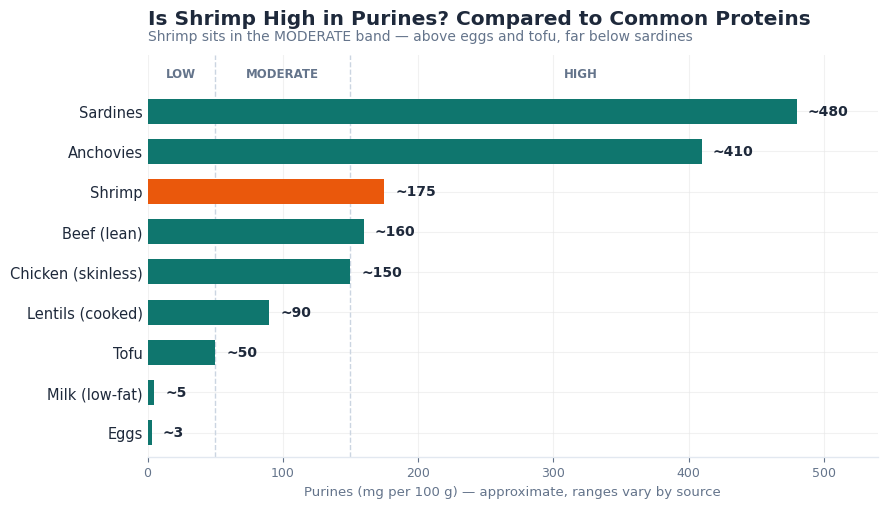
Purine values for shrimp vary by species and by the reference table used. Commonly cited food composition data places shrimp in the moderate purine range (50–150 mg per 100 g) to just above it, while some clinical diet guides list shellfish — including shrimp — among foods to limit. This disagreement exists because purine content differs between shrimp species, and values are often averaged across mixed samples.
The practical takeaway: shrimp is lower in purines than organ meats, sardines, or anchovies, but higher than eggs, dairy, tofu, and most vegetables.
You can look up the exact value for your portion using our serving-size purine calculator and compare shrimp against hundreds of other foods in our food reference.
Can You Eat Shrimp If You Have Gout?
For most people with gout, yes — in moderation, when you are not having a flare. Major health organizations frame it this way:
- The Arthritis Foundation classifies shrimp as a moderate-purine food, not a high-purine one, alongside crab, lobster, and oysters.
- The Mayo Clinic advises limiting shellfish because some types are high in purines.
- The University of Maryland Medical System lists shellfish among foods gout patients should limit or avoid.
The shared message across all three: portion and frequency matter more than complete elimination.
How Much Shrimp Is a Safe Serving?
A reasonable general guideline is:
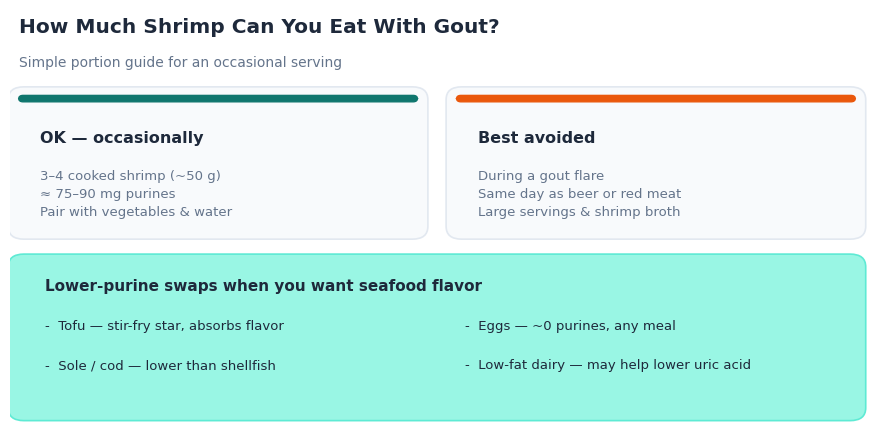
- ~3 to 4 cooked shrimp (about 50 g) as an occasional serving
- Not during an active gout flare — most clinicians recommend sticking to the strictest low-purine choices until the flare passes
- Not on the same day as other moderate-to-high purine foods like red meat, beer, or anchovies
Think of purine load as a daily budget. A small shrimp serving uses up part of that budget, but rarely all of it.
Lower-Purine Swaps for Shrimp
If you love seafood but want to protect your uric acid levels, these options are generally lower in purines:
- Eggs — near zero purines, versatile in any dish
- Tofu — low purine, absorbs flavors like shrimp does in stir-fries
- White fish such as sole or cod — lower purine than shellfish
- Low-fat dairy — linked in studies to lower uric acid levels
- Lentils and beans — moderate purines, but plant purines have not been shown to raise gout risk the way meat and seafood purines do
Want a ready-made day of eating built this way? See our sample low-purine meal day for four practical meal ideas.
Cooking Tips That Lower Your Purine Load
- Boil or steam rather than grill — some purines leach into cooking water, which you then discard
- Skip shrimp stock and seafood broth — purines concentrate in broths and sauces
- Pair with vegetables and whole grains — fiber-rich sides blunt the overall metabolic load of the meal
- Drink water with the meal — staying well hydrated helps your kidneys flush uric acid
The Bigger Picture
Diet is only one part of gout care. Food purines account for only about 15% of the uric acid in your body — the rest is produced by your own cells. That’s why medication, weight management, and limiting alcohol and sugary drinks often matter more than any single food choice. If you have frequent flares, a rheumatologist can address the underlying cause in ways diet alone cannot.
If you’re unsure whether your symptoms are gout-related, read our guide to common gout signs — including the warning signs that need prompt medical care.
Frequently Asked Questions
Is shrimp worse than chicken for gout? No — shrimp and chicken are broadly similar, both sitting in the moderate purine range. Either is fine occasionally in a small serving; neither is an everyday protein if your uric acid runs high. Compare both side by side in our food reference.
Can I eat shrimp during a gout flare? It’s best to avoid it. During a flare, most clinicians recommend the strictest low-purine diet — eggs, dairy, tofu, vegetables, and grains — until symptoms settle.
Is prawn the same as shrimp for purines? Yes. Prawns and shrimp are similar crustaceans with comparable purine content, so the same guidance applies to both.
Are shrimp chips or shrimp paste high in purines? Shrimp paste and concentrated shrimp products can be more concentrated sources of purines per gram. Small amounts as seasoning are unlikely to matter, but large servings are best avoided.
Do plant-based “shrimp” alternatives have purines? Most imitation shrimp is made from wheat, soy, or konjac. Soy-based versions contain moderate purines; wheat and konjac versions are low. None carry the same gout risk as real shellfish.
Sources
- Arthritis Foundation — “Which Foods are Safe for Gout?” (moderate-purine list)
- Mayo Clinic — “Gout diet: What’s allowed, what’s not”
- University of Maryland Medical System — “7 Foods That Trigger Gout”
- Annals of the Rheumatic Diseases — purine intake and recurrent gout attacks (Boston University study)
Last reviewed: September 2026. This article is educational and does not constitute medical advice. Always consult a qualified healthcare professional about your specific situation