Salmon and Gout: Raw vs Canned Purine Data (5 Rules)
Salmon and Gout: Does Preparation Change the Purine Risk?
Salmon is often called a healthy fish — and it is, in many ways. But for gout, the purine numbers tell a more complicated story. Raw salmon is firmly in the high-purine range, while canned salmon tells a very different story.
Here are 5 rules for eating salmon with gout, backed by measured purine values.
1. Raw salmon is high in purines: ~250 mg per 100g
Atlantic farmed salmon (raw) measures 249.9 mg of purines per 100g. Wild sockeye is even slightly higher at 259.8 mg. Both land squarely in the avoid range — comparable to many red meats.
This surprises people. Salmon’s reputation as a “healthy” fish comes from its omega-3s, which are genuinely beneficial. But omega-3s and purines are unrelated — a food can be rich in one and high in the other.
2. Canned salmon is dramatically lower: 88–133 mg
Here’s where it gets interesting. Canned salmon measures between 88 mg and 132.9 mg per 100g depending on the product — roughly half to one-third the purine content of raw salmon.
Why? Canning involves high heat and liquid, and purines are water-soluble — a significant portion leaches out into the canning liquid, which most people drain off. The result is a meaningfully lower-purine fish.
3. Rule: prefer canned over raw when gout is a concern
If you love salmon but manage gout, canned salmon (drained) is the smarter choice at 88–133 mg — moderate rather than high. Raw salmon preparations — sushi, sashimi, ceviche, or simply uncooked fillets — deliver the full ~250 mg.
Cooking raw salmon at home (baking, grilling) doesn’t replicate the canning effect unless you discard the cooking liquid. The canning process is uniquely effective at drawing purines out.
4. Rule: watch the portion even with canned
At 88–133 mg, canned salmon is moderate — not low. A standard 100g serving is reasonable; a 250g can eaten in one sitting pushes you toward 220–330 mg of purines, which is a high-purine meal by any measure.
Stick to around 100g per serving, and don’t pair it with other moderate-purine foods in the same meal.
5. Rule: compare against your alternatives
How does salmon stack up against other fish?
- Salmon, raw: ~250 mg — avoid
- Salmon, canned: 88–133 mg — moderate
- Tuna, canned: 142 mg — moderate
- Shrimp: 182.4 mg — moderate
Canned salmon is actually one of the better fish choices for gout — lower than canned tuna and shrimp. Raw salmon is among the worse.
Why Does Canning Lower Purines?
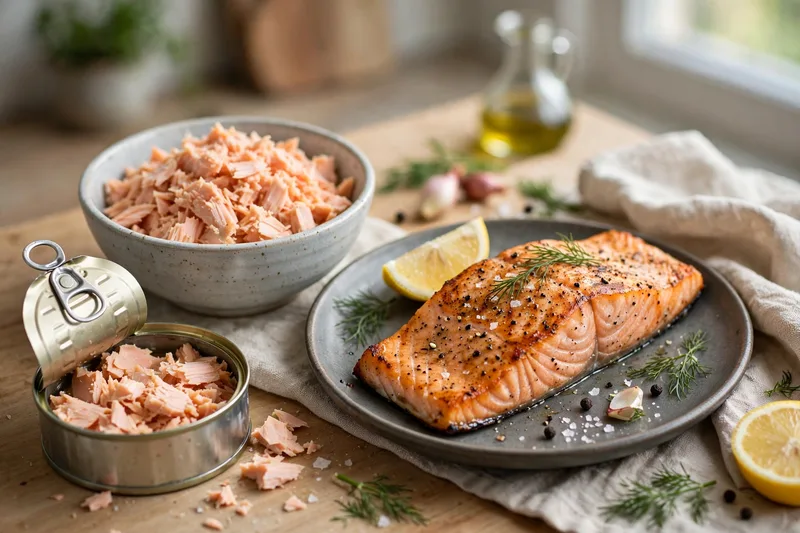
The drop from ~250 mg to 88–133 mg isn’t magic — it’s chemistry. Purines dissolve in water. Canning packs salmon in liquid and heats it under pressure for a long time, which gives purines plenty of opportunity to migrate out of the flesh and into the surrounding liquid.
When you open the can and drain it, you pour those dissolved purines down the sink. The fish left behind carries a fraction of its original purine load. Two factors drive the effect:
- Heat and time. Commercial canning reaches temperatures far above home cooking and holds them for longer. Extended heat breaks down cell walls and releases more purines into the liquid.
- Draining. The liquid does the heavy lifting only if you discard it. Eat canned salmon straight from the can with its juices, and you consume the leached purines too.
This principle applies beyond salmon. Boiling any meat or fish in water and discarding the broth reduces purines — which is why broths and gravies concentrate them. Canning just does it more aggressively than any home method.
What About Smoked Salmon and Lox?
Smoked salmon and lox sit in a grey zone. Our database has no measured purine value for smoked or cured salmon, so we can’t give you an exact number — and we won’t guess one.
Here’s what we do know. Smoking involves salt, smoke, and moderate heat — but not the prolonged liquid immersion of canning. Purines have nowhere to leach, so smoked salmon likely retains most of the raw fish’s purine content, around 250 mg per 100g. Cold-smoked lox involves even less heat. Until a laboratory measures it, treat smoked salmon and lox as high-purine and eat them sparingly if you manage gout.
If you’d like us to add a measured value, check our FAQ for how the database grows — and in the meantime, stick with drained canned salmon as your safer bet.
Salmon vs Other Fish: The Full Comparison
Put salmon in context against other common fish and proteins:
- Salmon, sockeye, wild, raw: 259.8 mg — avoid
- Salmon, Atlantic, farmed, raw: 249.9 mg — avoid
- Shrimp, mixed, farmed, raw: 182.4 mg — moderate
- Chicken breast, roasted: 178.5 mg — moderate
- Tuna, canned: 142 mg — moderate
- Salmon, canned: 88–133 mg — moderate
Two patterns stand out. First, raw salmon sits near the very top of this list — higher than chicken breast and shrimp. Second, canned salmon drops to the bottom — the lowest-purine fish option here, below even canned tuna.
For the complete picture across dozens of fish species, search the purine database — filter by the fish and seafood category and compare values side by side.
3 Gout-Friendly Ways to Eat Canned Salmon
Canned salmon at 88–133 mg works well in a low-purine eating pattern if you keep portions near 100g and pair it with low-purine sides. Here are three simple ideas.
1. Salmon salad on whole-grain bread
Mix 100g of drained canned salmon with diced cucumber, a squeeze of lemon, and a spoonful of low-fat yogurt instead of mayonnaise. Serve on whole-grain bread with a side of leafy greens. The bread, vegetables, and yogurt all sit in the low-purine range, so the meal’s total stays modest.
2. Salmon patties with vegetables
Combine drained canned salmon with an egg, breadcrumbs, and chopped herbs. Form small patties and bake — don’t deep-fry, since frying adds calories without reducing purines. Serve with roasted vegetables. For a full day of balanced low-purine meals, see our sample low-purine diet plan.
3. Salmon pasta with olive oil and lemon
Toss 100g of drained canned salmon through whole-grain pasta with olive oil, lemon zest, garlic, and steamed broccoli. Pasta and vegetables contribute almost no purines, so the salmon carries the meal’s purine load alone — and at this portion, it stays in the moderate range.
Salmon and Gout: Your Questions Answered
Can I eat salmon every week with gout?
It depends on the form. Raw salmon at ~250 mg per 100g is a poor choice for weekly eating if you manage gout — it’s firmly in the avoid range. Drained canned salmon at 88–133 mg works once or twice a week in 100g portions, paired with low-purine sides. If you experience frequent flares, ask your doctor before making any fish a regular habit — and learn to recognize the early signs of a gout flare so you can connect diet choices to symptoms.
Are omega-3s worth the purine tradeoff?
Omega-3 fatty acids support heart and joint health, and salmon is one of the richest sources. But omega-3s do not cancel out purines — your body still converts the purines to uric acid regardless of what else the fish contains. The smart move isn’t to avoid salmon’s benefits or ignore its purines; it’s to choose the lower-purine form. Drained canned salmon gives you meaningful omega-3s at roughly half the purine cost of raw.
Does farmed vs wild salmon matter for purines?
Barely. Atlantic farmed salmon measures 249.9 mg and wild sockeye measures 259.8 mg — both firmly in the avoid range. The difference of 10 mg is negligible in practice. Choose farmed or wild based on price, taste, and sustainability — not purines.
The Bottom Line
Preparation changes everything with salmon. Raw: ~250 mg (avoid). Canned and drained: 88–133 mg (moderate, in reasonable portions). Smoked and cured: unmeasured, so treat with caution. Don’t assume “salmon is salmon” — check the form, drain the liquid, and watch the portion.
Want to check another food? Search all 38,078 foods in our purine database.
For education only — not medical advice. Discuss diet changes with your doctor.