Beer and Gout: 5 Reasons Beer Is the Worst Drink for Your Uric Acid
Yes — beer is the single worst alcoholic drink for gout, and it is not close. No other common drink combines a meaningful purine load with alcohol’s uric-acid-raising effect. Large studies tracking tens of thousands of people consistently place beer at the top of the gout-risk list. Here is exactly why — and what to drink instead.
1. Beer Is One of the Only Drinks That Contains Purines
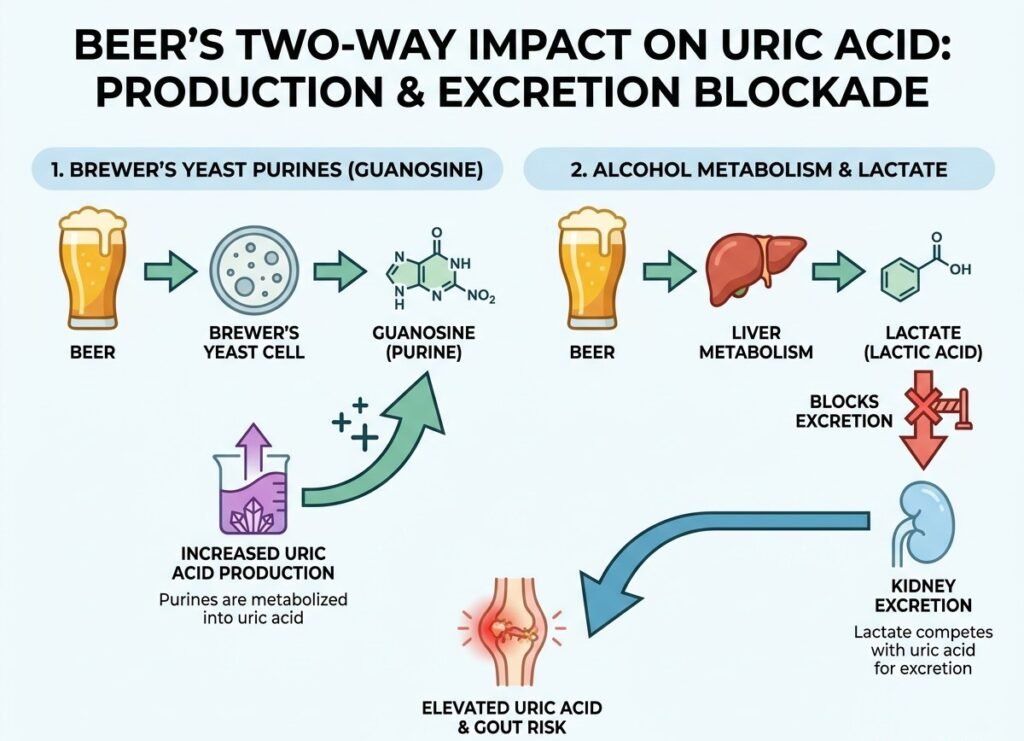
Most alcoholic drinks raise uric acid through alcohol alone. Beer does it twice. Brewer’s yeast — essential to brewing — is naturally rich in purines, especially guanosine, which your body converts efficiently into uric acid. Every pint delivers both a purine payload and an alcohol payload.
2. Alcohol Blocks Your Kidneys from Removing Uric Acid
When you drink, your liver metabolizes alcohol into lactate. Lactate and uric acid compete for the same exit route in your kidneys — and lactate wins. The more you drink, the more uric acid stays in your blood instead of leaving it in urine. This mechanism applies to all alcohol, but beer drinkers typically consume it in larger volumes than spirits drinkers.
3. Beer Dehydrates You
Alcohol is a diuretic. Dehydration concentrates the uric acid already in your bloodstream and makes it easier for crystals to form in your joints — the first step of a gout flare. A night of beer without water is a double hit: more uric acid produced, less flushed out.
4. Beer Rarely Comes Alone
Nobody eat a salad with their third pint. Beer occasions tend to include the exact foods gout hates most: chicken wings, burgers, processed meats, and salty snacks. Our article on chicken and gout covers how moderate food becomes a problem when portions grow — and wings with beer is the classic example. If you want to see how a typical pub night stacks up, run the numbers through our serving-size purine calculator.
5. Pints Make It Easy to Overdo
A standard spirit serving is 30–45 ml. A standard beer serving is 568 ml — more than ten times the volume. That volume difference is why beer studies show such strong risk: it is simply the most efficient way to consume a lot of alcohol (and yeast purines) in one sitting.
What Research Actually Shows
- A large study in The Lancet tracking 50,000 men found that beer intake raised gout risk far more than spirits, and risk climbed steadily with every additional daily serving.
- The same research program found moderate wine consumption showed no clear increase in gout risk in men — though “no clear link” is different from “proven safe.”
- The Arthritis Foundation and Mayo Clinic both advise avoiding beer, especially during flares.
One honest caveat: these studies show association, and beer drinkers often differ from non-drinkers in other ways. But the biological mechanisms (purines + blocked excretion) are well established, and the data points the same direction from every angle.
What About Wine and Spirits?
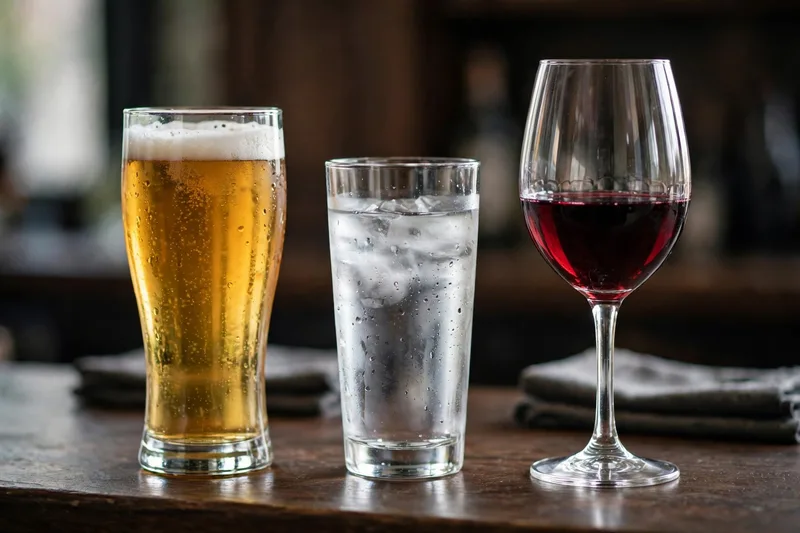
- Spirits (whiskey, vodka, gin): raise uric acid through alcohol alone — a real risk, but below beer in the studies.
- Wine: the weakest link to gout in research — some clinicians consider a small glass occasionally acceptable between flares, but nobody calls it beneficial
- Non-alcoholic beer: still brewed with yeast, so it still carries a purine load — better than regular beer, but not free. During a flare, skip it too.
If you are comparing what else ends up on the table, our food reference lets you check any drink or snack’s purine range in seconds.
What to Drink Instead
You do not need fancy substitutes — the best options are boring and effective:
.
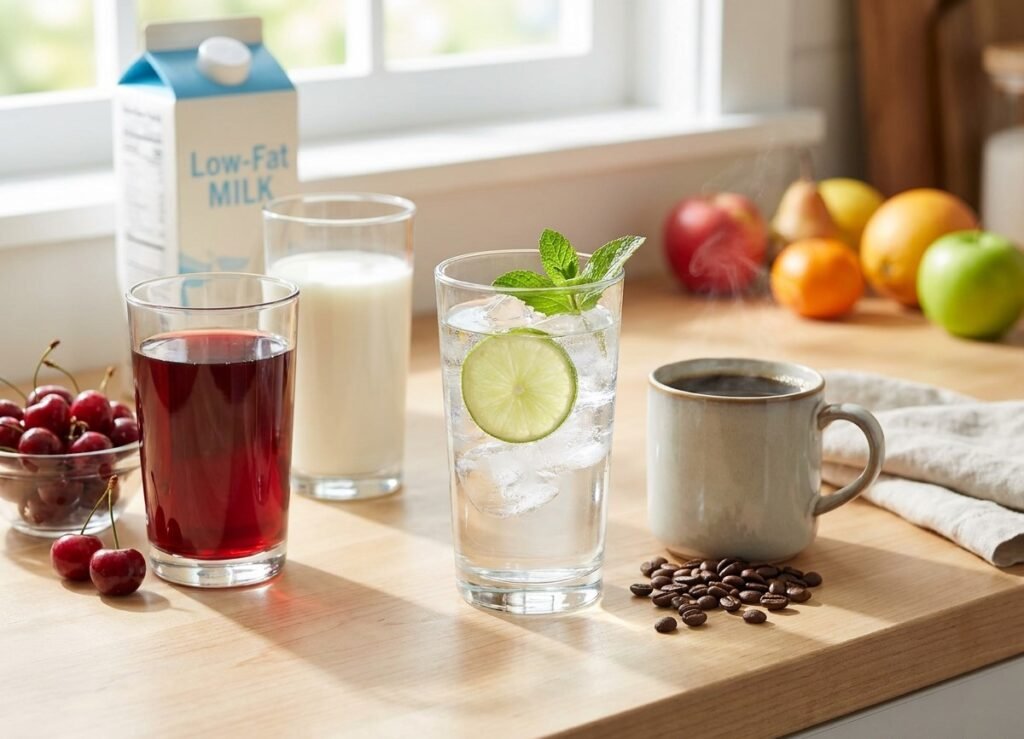
- Water — the single most underrated gout intervention; it directly helps your kidneys flush uric acid.
- Low-fat milk — research links it to lower uric acid levels.
- Coffee — observational studies associate regular coffee with lower uric acid (skip the sugar)
- Tart cherry juice — the most-studied “gout juice”; evidence is mixed but promising.
- Sparkling water with lime — gives you the “pint in hand” feeling at social occasions without the payload.
For flare days, build your drinks and meals around the safe list — our simple low-purine meal day pairs well with water, milk, and coffee, and our eggs and gout guide covers the protein side.
Can You Ever Drink Beer Again?
Honest answer: if you have gout, less is genuinely better, and none is safest — particularly if you get frequent flares. If your uric acid is well controlled and flares are rare, an occasional small beer is a personal risk calculation, not an instant flare. But during a flare, or while your uric acid is running high: zero. Your joints are counting on it.
And if flares keep coming back no matter what you cut out, that’s a sign to see a doctor rather than to keep shrinking your life. Our guide to common gout signs can help you judge whether what you’re experiencing is gout — and which symptoms should not wait.
Frequently Asked Questions
Is one beer going to trigger a gout attack? Probably not by itself — flares usually follow patterns, not single events. But each beer adds to the uric acid load that makes the next flare more likely. The risk is cumulative.
Is wine safer than beer for gout? Research suggests yes — wine shows the weakest link to gout risk. But “safer than beer” does not mean “safe,” and individual responses vary.
Does whiskey or vodka cause gout? Spirits raise uric acid through alcohol alone (no yeast purines), so they are below beer on the risk ladder — but above not drinking.
Can I drink non-alcoholic beer with gout? It has far less alcohol but still contains some yeast-derived purines. Between flares, an occasional one is a reasonable compromise; during a flare, skip it.
How long after a gout flare can I drink beer again? Wait until the flare has fully settled and ideally until your uric acid is back in a good range. Jumping back to beer within days of a flare is how the next one starts.
Sources
- The Lancet “Intake of purine-rich foods, protein, and dairy products and relationship to serum levels of uric acid” (Choi et al.)
- Arthritis Foundation “Which Foods are Safe for Gout?”
- Mayo Clinic “Gout diet: What’s allowed what’s not.”
- Harvard Health Publishing — alcohol, purines, and gout risk
Last reviewed: October 2026. This article is educational and does not constitute medical advice. Always consult a qualified healthcare professional about your specific situation.