Is Chicken High in Purines? 5 Portion Rules for Gout
Chicken is a moderate-purine food — roughly 140 to 175 mg per 100 g depending on the cut. It’s not banned on a gout diet, but it can’t be eaten freely either. The difference between chicken being a safe dinner and a flare trigger comes down to portion size, skin, and timing. Here are the 5 rules that matter.
How Many Purines Does Chicken Have?
Skinless chicken breast sits at the lower end of the moderate range — around 120–150 mg per 100 g in most food composition tables. Dark meat with skin pushes toward 175–200 mg per 100 g. That’s a meaningful difference: the skin and fat layer carry more purines than lean muscle.
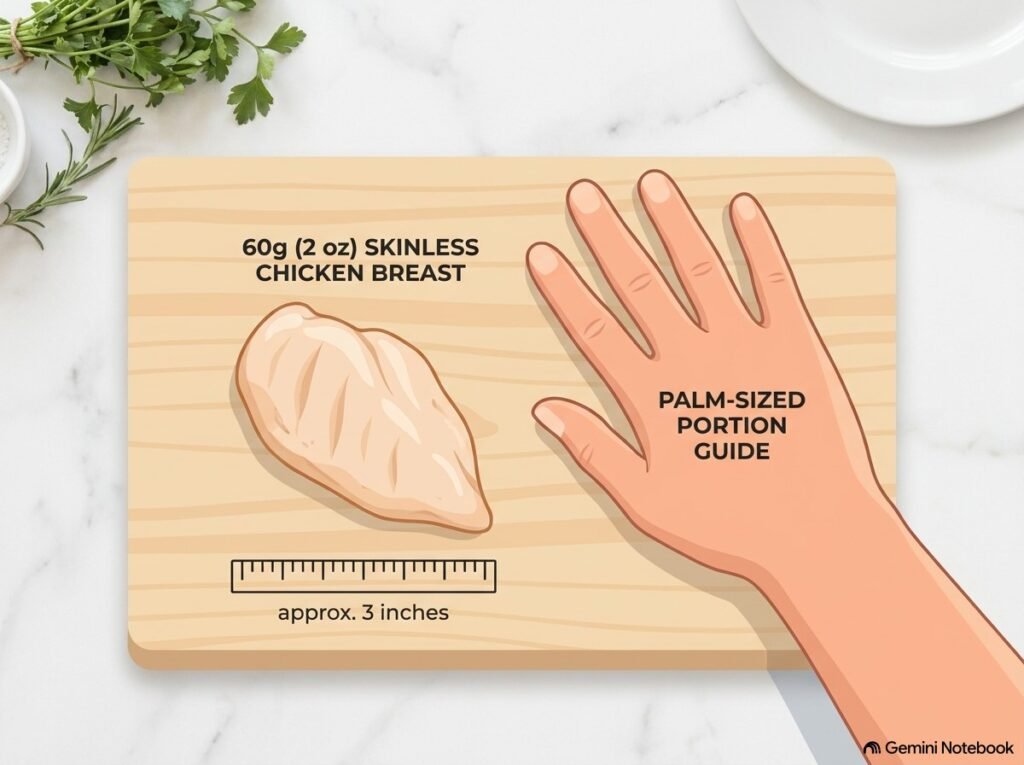
. Choosing skinless chicken breast keeps purine levels lower, as chicken skin adds both extra purines and saturated fat
For context: chicken is similar to shrimp, lower than most red meats and organ meats, and far higher than the near-zero-purine proteins like eggs and tofu.
Verify any cut’s value for your portion using our serving-size purine calculator, or compare chicken against 700+ foods in our food reference.
Rule 1: Keep Portions Palm-Sized
A safe general serving is 60 g (about 2 oz) of cooked chicken — roughly the size of your palm. That’s roughly 90 mg of purines, a reasonable share of a day’s budget. The problem isn’t chicken itself — it’s that a typical restaurant serving is 3–4 times that amount.
Rule 2: Remove the Skin
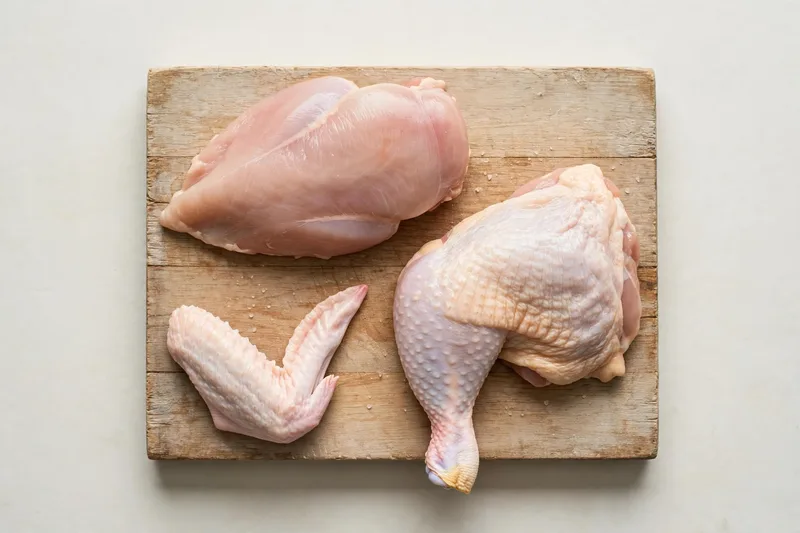
Chicken skin adds purines and saturated fat without adding protein. Skinless breast is your best cut; wings and skin-on thighs are your worst. If you cook chicken with the skin on for flavor, remove it before eating — the purine difference is worth the trade-off.
Rule 3: Never During a Flare
This is the rule people break most often — and regret. During an active gout flare, chicken should come off the menu entirely until symptoms settle. Use the flare period for genuinely safe proteins instead: eggs, low-fat dairy, and tofu. As our article on eggs and gout explains, eggs are one of the few proteins with essentially zero purines — that’s why they’re the flare-day default.
Rule 4: Don’t Stack It
Chicken on a normal day is fine. Chicken plus beer, plus shrimp at lunch, plus a meat-heavy dinner is how budgets blow up. Purines accumulate across everything you eat in a day. If chicken is your protein at dinner, make lunch an egg, dairy, or tofu meal. Our sample low-purine meal day shows how this balancing looks in practice.
Rule 5: Boil or Bake — Don’t Fry, and Skip the Broth
Frying adds saturated fat, which is its own gout concern. Better methods:
- Boiled or poached — some purines leach into the water, which you discard
- Baked or grilled, skinless — no added purine sources
- Avoid chicken stock, gravy, and soup from boiled chicken — purines concentrate in the liquid. Chicken soup sounds gentle, but for gout it’s one of the worst delivery systems.
Chicken vs. Your Other Options
Chicken’s real role in a gout diet is the “moderate middle” — better than red meat and organ meats, worse than the genuinely free options. Worth knowing:
- Eggs and tofu beat chicken on purines every time — see our eggs and gout guide
- Shrimp is roughly the same as chicken — both are “yellow zone” foods, so don’t eat them the same day; our shrimp and gout article breaks that comparison down
- Fish varies wildly — white fish like sole is lower; sardines and anchovies are red zone
The Bigger Picture
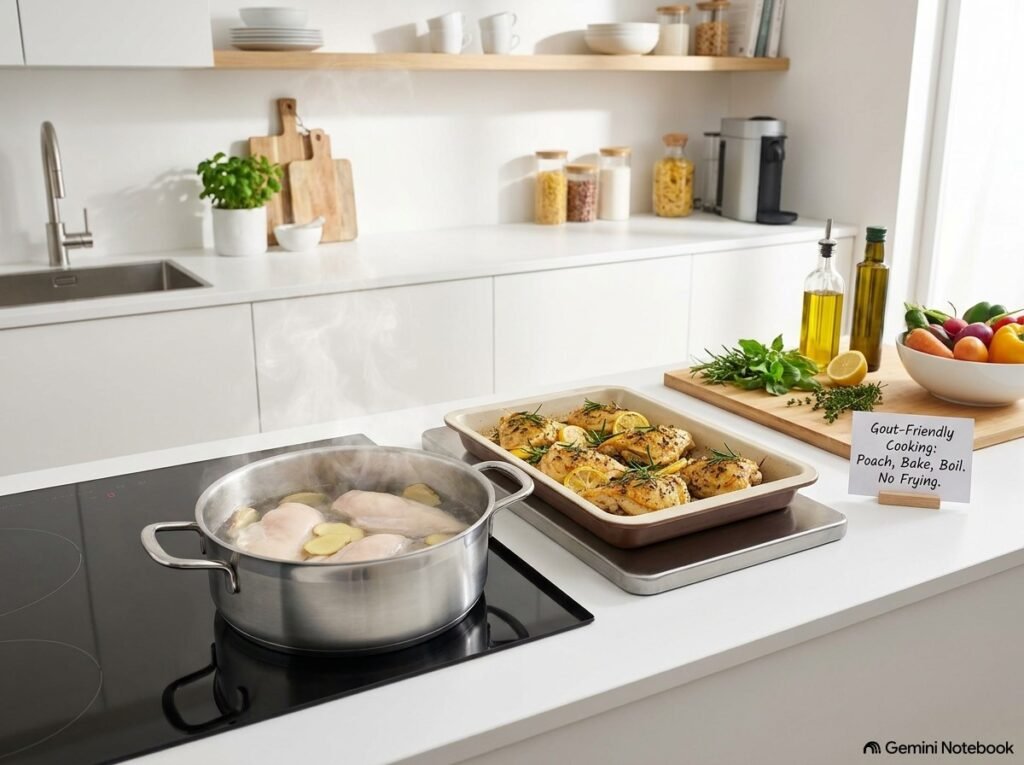
. Always discard cooking water and avoid chicken broths or gravies, as purines concentrate in the liquid
Chicken is a moderation food, not a danger food — and that framing matters, because overly restrictive diets fail. The bigger drivers of uric acid are beer and sugary drinks, body weight, and (for many patients) medication needs that only a doctor can assess. If flares keep returning despite dietary care, that’s a signal to see a rheumatologist, not to keep shrinking your food list. Unsure whether your joint pain is even gout? Check the common signs of gout — including which symptoms need urgent care.
Frequently Asked Questions
Is chicken worse than beef for gout? No — most beef cuts are similar to or slightly higher than chicken. Both are moderate. The bigger difference is in organ meats (liver, kidney), which are far higher than either.
Can I eat fried chicken with gout? The chicken is the same purine either way, but frying adds saturated fat, and the breading often comes with salty, processed sides. Baked or boiled skinless chicken is the better choice — save fried for rare occasions.
Is chicken soup good during a gout flare? Surprisingly, no. Purines dissolve into the cooking water, so chicken broth and soup are concentrated purine sources — one of the most misleading “comfort foods” for gout patients.
Is chicken breast better than thighs for uric acid? Yes. Breast meat is leaner and sits at the lower end of the moderate range. Skinless thigh is acceptable; wings and skin-on dark meat are the highest-purine chicken options.
Can I eat chicken every day if I have high uric acid? A small palm-sized portion most days is reasonable for many people, but daily large servings will keep your purine load high. Rotating in eggs, dairy, tofu, and fish gives your body less purine to process overall.
Sources
- Arthritis Foundation — “Which Foods are Safe for Gout?” (moderate-purine food list)
- Mayo Clinic — “Gout diet: What’s allowed, what’s not”
- U.S. Department of Agriculture — FoodData Central, chicken composition data
- Annals of the Rheumatic Diseases — purine intake and recurrent gout attacks (Boston University study)
Last reviewed: October 2026. This article is educational and does not constitute medical advice. Always consult a qualified healthcare professional about your specific situation.