Eggs and Gout: 5 Best Reasons Eggs Are a Gout-Safe Protein
Eggs and Gout: Can You Eat Eggs with High Uric Acid?
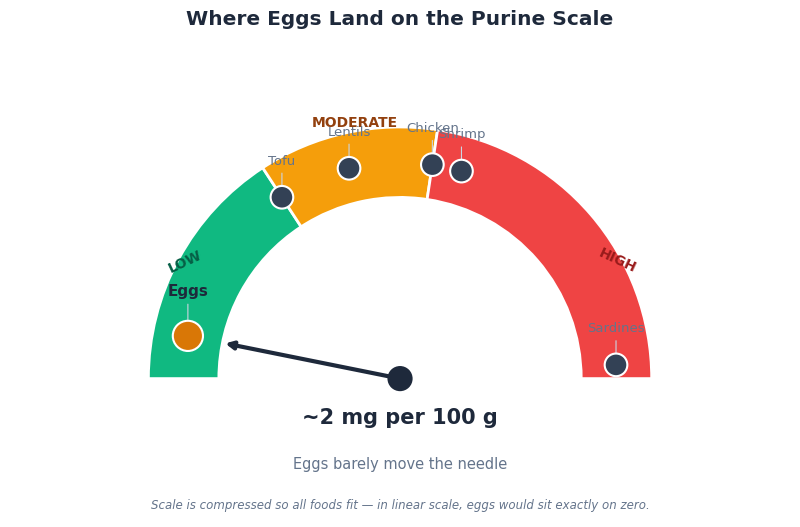
Yes — eggs are one of the best foods you can eat if you have gout. A whole egg contains only about 2 mg of purines per 100 g, which is effectively zero. Eggs are a rare case where a food is genuinely unlimited on a gout diet: you can eat them during flares, between flares, and every day if you like.
How Many Purines Do Eggs Have?

Almost none. Standard food composition tables put eggs at roughly 0–5 mg of purines per 100 g — the lowest value of any common protein food. For comparison, that’s around 1% of the purine load of sardines.
The reason is simple: purines are part of cell nuclei, and the purine content of a food roughly tracks its cell density. Muscle and organ meats are dense with cells (high purines). An egg yolk is a single cell, and egg white is almost pure protein with no cells at all — so there’s simply nothing to contain purines.
You can confirm any protein’s value using our serving-size purine calculator or browse the full comparison in our food reference.
Can You Eat Eggs If You Have Gout?
Yes — and major health organizations actively recommend them:
- The Arthritis Foundation lists eggs among the low-purine foods that are safe for people with gout.
- The Mayo Clinic includes eggs in its gout diet as a recommended protein source.
- Clinical diet guides for gout consistently use eggs as the default “safe protein” when explaining what to eat during a flare.
Unlike almost every other protein, eggs require no portion control for gout purposes. The moderate-purine limits that apply to chicken, fish, or lentils simply don’t apply here.
How Many Eggs a Day Is Okay?
For gout, the honest answer is: gout doesn’t limit your eggs at all. The limits that exist come from other health considerations:
- General health: Most current dietary guidelines treat 1–2 eggs a day as reasonable for healthy adults.
- Diabetes or heart disease: Some clinicians suggest moderating yolks — ask your doctor what’s right for you.
- Cooking method matters more than count: Two boiled eggs are a very different meal from two eggs fried in butter and served with bacon.
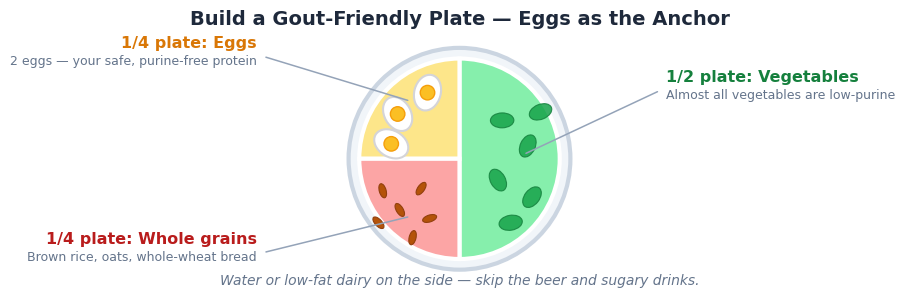
Gout-specific tip: During a flare, eggs are one of the few protein foods you don’t need to cut back on. If you need a strict low-purine day, build it around eggs, dairy, tofu, vegetables, and grains — our sample low-purine meal day shows exactly how.
Why Eggs Beat Other Proteins for Gout
https://uricacid.online/wp-content/uploads/2026/10/eggs-purine-comparison.png
Eggs aren’t just safe — they’re strategically useful:
- Complete protein: All nine essential amino acids, which matters when your protein choices are restricted
- Very filling: High satiety makes it easier to avoid higher-purine temptations
- Cheap and available everywhere: Unlike specialty “gout diet” products
- Cook fast: A boiled egg is a low-purine meal in 7 minutes, no planning needed
- Versatile: Breakfast, lunch, dinner, snacks — they fit any meal pattern
If you’re tracking uric acid-friendly eating over time, our food reference lets you save eggs to your private shortlist so they’re always one click away.
The 3 Mistakes to Avoid with Eggs and Gout
Eggs themselves aren’t the problem — these habits are:
- The bacon-and-sausage side. Processed meats are high-purine and associated with higher gout risk. Eggs with bacon isn’t an egg problem — it’s a bacon problem. Pair eggs with vegetables, whole grain toast, or fruit instead.
- Ignoring the rest of the plate. An egg eaten with a sugary drink or pastry doesn’t cancel those choices. Total diet pattern matters more than any single food.
- Assuming “healthy” means “unlimited everything else.” Eggs give you a safe protein base — use that freedom to crowd out the foods that do raise uric acid: beer, sugary drinks, organ meats, and large servings of red meat.
Cooking Tips for Gout-Friendly Eggs
- Boiled or poached — the purest option, nothing added
- Scrambled with vegetables — spinach, tomatoes, and mushrooms add fiber and volume with negligible purines
- Go easy on butter, cream, and cheese — fine in small amounts, but they add saturated fat without helping your uric acid
- Skip the gravy and processed sides — sauces based on meat drippings carry concentrated purines
The Bigger Picture
Eggs solve the protein problem in a gout diet, but they don’t replace medical care. High uric acid is often silent until it isn’t — and persistent high levels can damage joints and kidneys even without obvious flares. If you’ve had gout attacks, or your blood tests keep showing high uric acid, a doctor can address the root cause in ways no food can. If you’re not sure whether your joint pain is gout, read our guide to common gout signs — including the warning signs that shouldn’t wait.
Frequently Asked Questions
Are egg whites better than whole eggs for gout? Both are effectively purine-free, so gout doesn’t force a choice. Whole eggs are more filling and nutritious; egg whites are a good option if your doctor has asked you to limit yolks for other reasons.
Can I eat eggs during a gout flare? Yes — eggs are one of the safest foods during a flare. When most other proteins are off the table, eggs, dairy, and tofu become your main protein sources.
Do eggs raise uric acid? No. Large dietary studies have not linked egg consumption to higher uric acid levels or more gout attacks. Eggs contain essentially no purines, which is the dietary component that matters for uric acid.
Is a boiled egg good for high uric acid? Yes — boiling adds nothing and takes nothing away. A boiled egg is about 0 mg of added purines, making it one of the simplest safe snacks for people with high uric acid.
Are duck eggs or quail eggs different for gout? They’re similar — all bird eggs are very low in purines. The same guidance applies regardless of the type of egg.
Sources
- Arthritis Foundation — “Which Foods are Safe for Gout?” (low-purine foods list)
- Mayo Clinic — “Gout diet: What’s allowed, what’s not”
- U.S. Department of Agriculture — FoodData Central, egg composition data
- Annals of the Rheumatic Diseases — purine intake and recurrent gout attacks (Boston University study)
This article is educational and does not constitute medical advice. Always consult a qualified healthcare professional about your specific situation.