Gout Medication: What Each Type Does, Who Needs It, and What to Ask Your Doctor
When people search for gout medication, they usually picture one thing: a pill that stops the pain. The reality is more useful than that. Doctors use two completely different kinds of gout medicine, and each one does a different job. One calms a flare that is happening right now. The other quietly lowers uric acid day after day so flares stop happening in the first place. Mixing up the two jobs is one of the most common reasons gout keeps coming back.
This guide explains each type in plain language: what it does, when doctors reach for it, and what the major guidelines actually say. It is education, not a prescription. Every decision about medication belongs to you and your doctor.
The two jobs of gout medication
Cleveland Clinic describes gout treatment as a two-pronged approach, and the picture is simple once you see it:
- Job 1 — stop the flare. Medicines that reduce pain and swelling during an attack: NSAIDs, colchicine, and corticosteroids.
- Job 2 — lower uric acid for good. Daily medicines that bring blood uric acid down and keep it there so crystals dissolve and flares stop: mainly allopurinol and febuxostat.
Here is the catch that confuses many people. The Job 1 medicines do nothing about your uric acid level. The Job 2 medicines do nothing for the pain of a flare that is happening today — in fact, starting them can briefly trigger flares before things improve. Knowing which job a pill does changes how you think about the whole treatment plan.
Flare medications: calming the attack
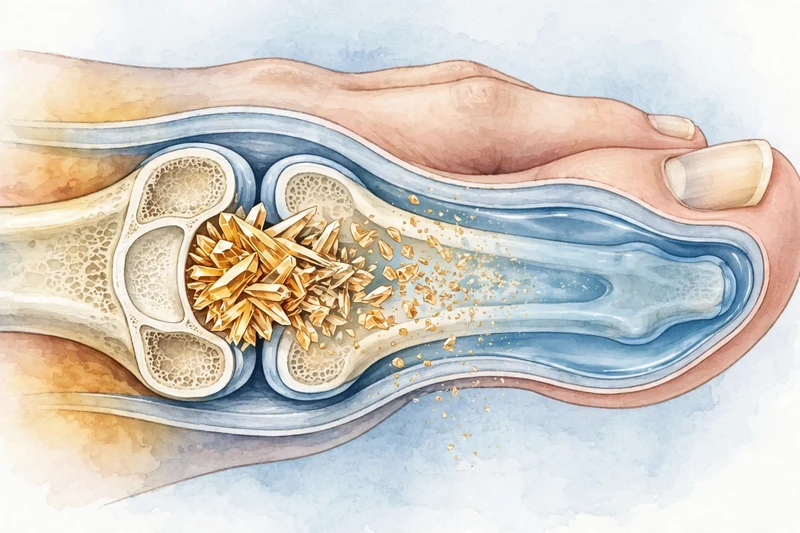
A gout flare is an immune reaction. Needle-shaped uric acid crystals form in the joint — most famously the big toe — and the immune system attacks them, causing sudden redness, heat, swelling, and pain that can peak within hours. Flare medicines work by calming that immune response, not by removing the crystals. An evidence review published in American Family Physician found that NSAIDs, colchicine, and corticosteroids all effectively reduce the pain of acute gout.
NSAIDs
Non-steroidal anti-inflammatory drugs such as ibuprofen, naproxen, and indomethacin are usually the first thing people reach for when a flare begins, and the evidence backs that up: multiple NSAIDs reduce gout pain with no meaningful difference in effectiveness between them. They work best when taken as early as possible in the flare. Because they can irritate the stomach and strain the kidneys — the very organs that clear uric acid — they are not right for everyone, which is a call your doctor makes.
Colchicine
Colchicine is an older medicine with a specific talent: it interferes with the immune cells that swarm uric acid crystals, which makes it very effective against gout inflammation. Research shows that a low dose works as well as a higher dose for flare pain, with fewer stomach side effects. Doctors also use low-dose colchicine for a second purpose: preventing flares during the first months after someone starts daily uric-acid-lowering therapy, when flare risk temporarily rises.
Corticosteroids
When NSAIDs and colchicine are not suitable — for example, in people with kidney problems or stomach issues — corticosteroids such as prednisone are an effective alternative. They can be taken as pills, injected into the painful joint, or given as a muscle injection, and studies show they relieve acute gout pain about as well as NSAIDs. For severe attacks involving several joints at once, specialists sometimes use an injectable medicine called anakinra, which blocks a specific inflammatory signal.
The honest truth about all of these: they end the episode, but the crystals remain. As our guide to nighttime flares explains, attacks tend to return — more often, lasting longer, and spreading to more joints — until the underlying uric acid problem is addressed. That is where the second group of medicines comes in.
Daily medicines that lower uric acid
Urate-lowering therapy (ULT) is the long game. These medicines are taken every day, usually for years, with one goal: push blood uric acid below the level where crystals can form, and keep it there until existing crystal deposits dissolve. The American College of Rheumatology’s 2020 gout guideline — 42 recommendations built from a systematic evidence review — puts this strategy at the center of gout care.
Allopurinol: the first-line choice
Allopurinol is the most commonly used urate-lowering drug, and the ACR guideline names it the preferred first-line option — including for people with moderate-to-severe chronic kidney disease. It works by blocking xanthine oxidase, an enzyme your body uses to make uric acid. Less production means lower blood levels. Cleveland Clinic notes that it is inexpensive and very effective, yet underused: in studies the clinic cites, fewer than 38% of people with gout reached their uric acid target, and only about a third of people with gout were taking allopurinol at all.
Febuxostat: the backup option
Febuxostat blocks the same enzyme as allopurinol. Cleveland Clinic describes it as the option used when allopurinol cannot be used, because studies linked it to a slightly higher risk of death from heart disease. That does not make it a bad drug — it makes it a second-choice drug, reserved for people who cannot take allopurinol. Your cardiologist and rheumatologist weigh that trade-off together.
Probenecid and pegloticase: the specialists
Two more medicines cover the edges. Probenecid takes a different approach: instead of slowing uric acid production, it helps the kidneys flush more uric acid out in urine. It is an alternative for people who cannot take the first-line drugs. Pegloticase, given as an intravenous infusion, is reserved for severe, hard-to-treat gout — it breaks uric acid down directly in the blood. Both are specialist territory, not first steps.
Who actually needs daily medication?
Not everyone with high uric acid needs a daily pill. The ACR guideline strongly recommends starting urate-lowering therapy for people with:
- visible uric acid lumps under the skin (tophi),
- joint damage on X-ray caused by gout,
- frequent flares — two or more per year,
- moderate-to-severe chronic kidney disease,
- a history of kidney stones, or
- very high uric acid (above 9 mg/dL).
Notably, the guideline leans against starting daily therapy after a single first flare when none of those factors are present. This is why a proper diagnosis and blood work matter more than a one-time guess. If you are unsure where you stand, our guide to dangerous uric acid levels explains the numbers doctors look at, and the symptoms page covers what gout actually feels like.
The target: below 6 mg/dL, and why starting can feel worse first
Uric acid starts crystallizing out of blood at about 6.8 mg/dL. The ACR guideline’s strong recommendation is a “treat-to-target” strategy: start the uric-acid-lowering drug at a low dose, then raise it step by step — guided by repeat blood tests — until uric acid stays below 6 mg/dL. People with visible tophi aim even lower, below 5 mg/dL, to dissolve the deposits faster.
Here is the part nobody warns you about clearly enough. When uric acid levels start falling, old crystal deposits begin to loosen and shift, which can trigger flares in the first months of therapy. The American Family Physician review is blunt about this: urate-lowering therapy does not reduce flare frequency during the first six months — the risk temporarily goes up — which is why doctors prescribe preventive anti-inflammatory medicine (usually low-dose colchicine or an NSAID) alongside it for at least 3 to 6 months. After about 12 months on therapy, flare frequency falls.
This is also where most treatment failures happen. People feel fine, or they get a flare right after starting the daily pill, and they stop taking it. Cleveland Clinic’s rheumatologists stress that gout is a chronic disease and the daily medicine only works if taken consistently — stopping it lets uric acid climb straight back up and the crystal deposits rebuild. Your doctor should be checking your uric acid level with blood tests to confirm the dose is actually working.
What medication cannot do
Medication is powerful, but it is not the whole plan. Diet and lifestyle still matter — they just matter differently than most people expect. The evidence review in American Family Physician found insufficient evidence that diet and lifestyle changes alone manage gout effectively, yet still called it reasonable to cut back on purine-rich red meat, shellfish, sugary drinks, and alcohol while losing excess weight. Cleveland Clinic puts it memorably: the idea that skipping steak will make your uric acid plummet enough to dissolve crystals is very unlikely — but a heart-healthy diet is never a bad idea, and medication does the heavy lifting.
Where diet genuinely helps is at the margins that add up: our 38,078-food purine database shows, for example, that regular beer carries 8.48 mg of purines per 100 mL and dark beer 13.51 mg per 100 mL — a real, measurable load on top of any medication. Low-fat dairy pulls the other way: milk at 2% fat measures just 0.6 mg per 100 g, and dairy is consistently linked with lower uric acid. The diet plan page and the evidence-backed steps guide lay out the full picture. Think of it this way: medication sets the level, and daily choices nudge it in the right direction.
Questions to ask your doctor
Because dosing and drug choice are individual medical decisions, this article deliberately gives no dosage instructions and recommends no specific drug. What it can do is help you walk into the appointment better prepared. Consider asking:
- Do I meet the criteria for daily uric-acid-lowering therapy, or is flare-only treatment right for me for now?
- What is my current uric acid level, and what target should we aim for?
- Will I need preventive anti-inflammatory medicine when starting therapy, and for how long?
- How often should my uric acid be rechecked while the dose is being adjusted?
- Which flare medicine is safest for me, given my kidneys, stomach, and other medicines?
- Are there medicines I already take — such as diuretics — that raise uric acid?
That last question matters more than most people realize: some common blood pressure medicines push uric acid up, and your doctor may be able to switch them. The FAQ page answers more of the everyday questions people ask about living with gout.
References
- FitzGerald JD et al., “2020 American College of Rheumatology Guideline for the Management of Gout,” Arthritis Care & Research, 2020 — the 42-recommendation guideline behind this article: allopurinol as preferred first-line therapy, treat-to-target below 6 mg/dL, and 3–6 months of anti-inflammatory prophylaxis when starting therapy.
- Cleveland Clinic, “When to Consider Medication for Gout Attacks” — the two-pronged treatment framing; allopurinol as inexpensive and underused; why consistent daily therapy matters.
- Noss MR, Saguil A, “Gout: Diagnosis and Management,” American Family Physician, 2017 — evidence review finding NSAIDs, colchicine, and corticosteroids all effective for acute gout; urate-lowering therapy reduces flares at 12 months but not in the first 6 months, when prophylaxis is needed.
For education only — not medical advice. Discuss diet changes with your doctor.