Is Milk Good for Gout? Low-Fat Dairy, Purine Data & What Studies Say
When you have gout, protein feels like a minefield. Beef carries purines, shellfish carries purines, even some vegetables get whispered about. So when someone tells you a glass of milk can actually lower your uric acid, it sounds too good to be true. But this is one of the best-supported diet findings in gout care — and our measured purine data shows just how far milk is from everything else on your plate.
In this guide: the exact purine numbers for milk, yogurt, and cheese from our 38,078-food purine database, why dairy behaves the opposite of meat protein, which milk type gout guides recommend, how much to drink, and where lactose-intolerant readers stand.
Is milk good for gout? The short answer
Yes. Low-fat milk and low-fat dairy are the rare protein foods that don’t just avoid adding purines — research shows they help your body get rid of uric acid. The Arthritis Foundation advises people with gout to drink low-fat milk and eat low-fat dairy specifically because the proteins in milk promote the excretion of uric acid in the urine. The National Kidney Foundation cites research from the Journal of Dairy Science finding that eating more low-fat dairy and yogurt may lower uric acid levels and reduce gout flares.
Dairy also sits in an unusual nutritional niche: it is an animal protein with almost no purines at all. That combination — high-quality protein plus measured purine levels near zero — is why dietitians keep putting dairy at the center of gout-friendly meal plans.
The measured purine numbers: milk has nearly none
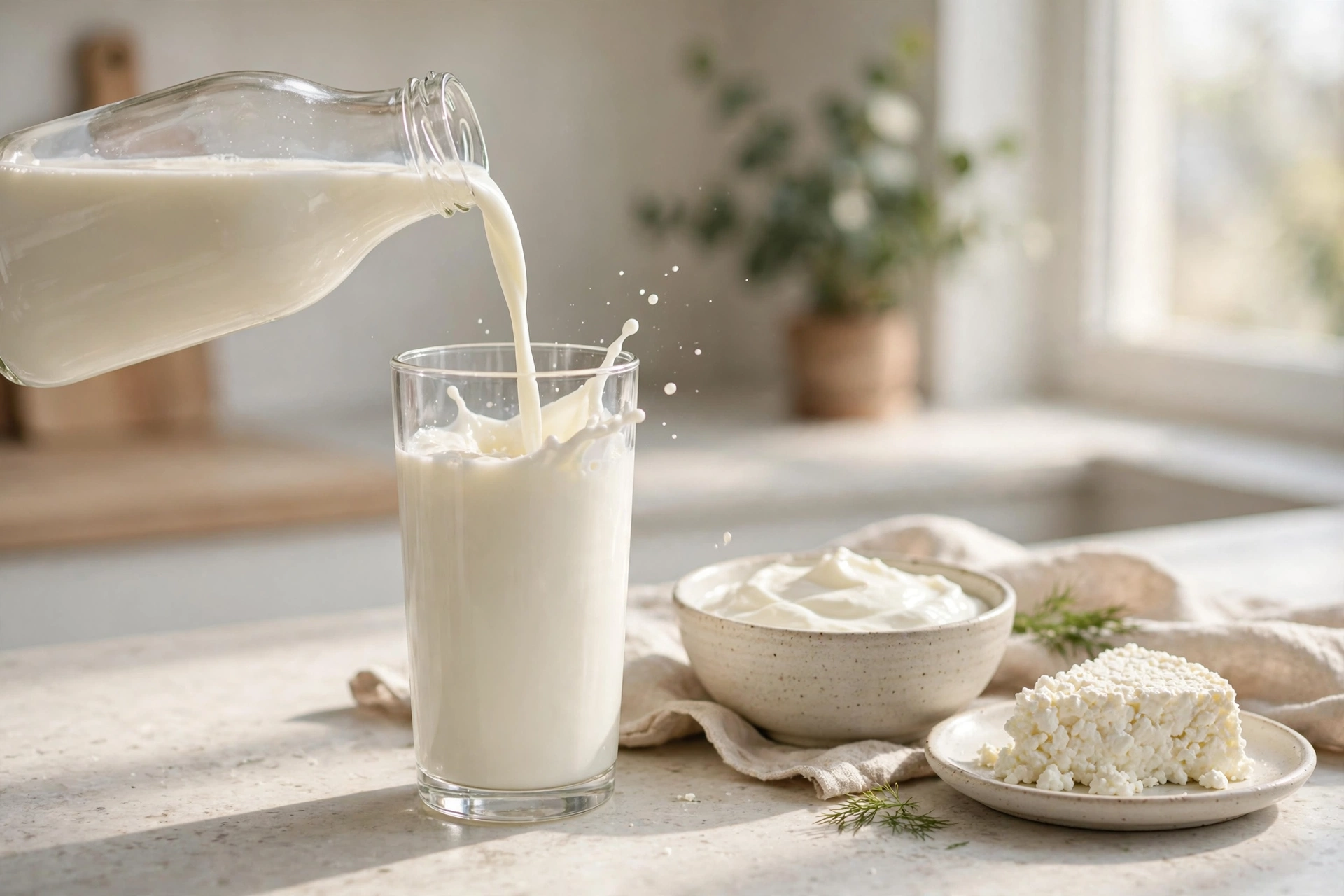
Most gout guides say “low purine” and stop there. Here are the actual measured values from our database, in milligrams of purines per 100 grams:
- Plain milk: 0 mg/100g (measured, Japan) — effectively nothing
- Milk, 2% fat: 0.6 mg/100g (measured, USA)
- Cream, fresh: 0.2 mg/100g (measured, Japan)
- Butter: not detected (measured, Japan) — purines are essentially absent
- Plain yogurt: 7 mg/100g (measured, Canada)
- Nonfat plain yogurt: 8.28 mg/100g (measured, USA)
- Drinkable yogurt: 1.4 mg/100g (measured, Japan)
- Cottage cheese: 8 mg/100g (measured, Canada)
- American cheese: 7 mg/100g (measured, USA)
- Queso fresco: 0.67 mg/100g (measured, USA)
For perspective, roasted chicken breast measures 178.5 mg/100g in the same database — see our chicken and gout breakdown. A glass of milk carries roughly zero purines next to a chicken breast’s nearly 180 mg. That is not a rounding difference; it is a different universe.
Why dairy lowers uric acid instead of raising it
This is the part most guides skip, and it matters because it explains why dairy isn’t just “safe” — it’s actively useful.
Your body turns dietary purines into uric acid. So protein foods with lots of purines (organ meats, anchovies, red meat) push uric acid up. Dairy proteins break this pattern. Casein and lactalbumin — the main proteins in milk — have a uricosuric effect: they prompt your kidneys to excrete more uric acid into the urine, clearing it out rather than letting it build up in the blood and joints.
So with dairy you get the mechanism working in both directions: almost no purines coming in, and extra uric acid going out. That’s why studies consistently find that people who drink low-fat milk have lower uric acid levels and fewer gout attacks — and why the benefit is specific to dairy rather than protein in general. The other near-zero-purine protein, by the way, is eggs — our eggs and gout guide covers those numbers.
Low-fat or full-fat? Which milk should you choose
All the published studies backing dairy for gout looked at low-fat dairy — skim, 1%, and low-fat yogurt. That’s what the Arthritis Foundation and the National Kidney Foundation recommend, and it stays the safest advice.
Is full-fat milk actually bad for gout? Honestly, the evidence doesn’t pin a specific purine crime on whole milk’s fat. But the studies didn’t test it, and saturated fat carries its own baggage for heart health — and heart health already matters more when you have gout, since the conditions travel together. Skim or 1% milk gives you the protein benefit without the question marks.
Practical picks:
- Best everyday choice: skim or 1% milk
- Best fermented option: plain low-fat or nonfat yogurt
- Good for cooking: low-fat cottage cheese (8 mg/100g, 98 kcal/100g)
- Skip for the gout benefit: flavored yogurts, sweetened dairy drinks, ice cream as a routine habit — the added sugar and fructose work against you by raising uric acid
Cow’s milk vs soy milk: the gap nobody quantifies
Many gout guides wave at soy milk as an equivalent alternative. Our measured values tell a more precise story:
- Cow’s milk: 0–0.6 mg purines/100g
- Soy milk: 21.91 mg purines/100g (measured, Japan)
Soy milk carries roughly 35 times the purines of cow’s milk. Now, 21.91 mg is still a low number — it lands well below chicken’s 178.5 mg, and larger population studies have found soy products harmless or even favorable for gout. But it is not the same benefit: soy milk lacks the casein-and-lactalbumin uricosuric effect that makes dairy special. If you tolerate dairy, cow’s milk is the stronger choice for gout. If you don’t, soy milk is still a reasonable protein pick — just don’t expect it to actively lower uric acid the way dairy does. Our database doesn’t have measured purine values for almond or oat milk, so we can’t score them honestly; treat any claims about them with skepticism.
How much dairy should you have each day?
Studies generally show the benefit in people consuming roughly 1–2 servings of low-fat dairy daily — for example, a glass of milk plus a cup of yogurt. No trial has established an exact dose, and more isn’t infinitely better: a half-gallon a day just adds calories without extra evidence of benefit.
A sensible target: one to two servings of low-fat dairy per day, kept as part of an overall lower-purine eating pattern like the one in our gout diet plan. And if you’re mid-flare, dairy is one of the foods you can keep eating confidently — unlike meat and seafood, it won’t add fuel. Watch for the signs of a gout flare so you know when to tighten the rest of your diet.
Yogurt and cheese: what to pick and what to avoid
Plain yogurt is the second-best dairy pick after milk. Our measured values run 1.4–8.28 mg/100g across plain varieties — all comfortably low. The danger is in the flavor aisle: fruit yogurts and sweetened yogurts add sugar, and fructose raises uric acid much the way alcohol does. If plain yogurt bores you, sweeten it yourself with fresh fruit — you control the sugar.
Cheese is also fine in moderation, but it deserves a different frame. Measured values are low — American 7 mg, cottage 8 mg, Monterey Jack 9.1 mg, provolone 12.55 mg/100g — but cheese is calorie-dense (American cheese measures 366 kcal/100g, grated cheese 420 kcal/100g). Use cheese as a flavor and protein accent, not a bulk food, and your waistline and your joints both win.
What if you’re lactose intolerant?
Lactose-free milk delivers the same milk proteins without the digestive fallout, so it’s the cleanest substitute for gout purposes — same casein, same lactalbumin, same near-zero purines. Hard cheeses and yogurt are often tolerated because fermentation and aging remove most lactose. If dairy is entirely off the table, soy milk at 21.91 mg/100g remains a reasonable option, as covered above — safe, just without dairy’s extra uric-acid-flushing effect.
Quick gout-friendly ways to use dairy
- Breakfast bowl: plain low-fat yogurt with berries and a spoonful of oats
- Post-workout: a glass of 1% milk instead of a sugary sports drink
- Lunch swap: cottage cheese with vegetables as the protein where red meat used to be — see our red meat and gout guide for the numbers behind the swap
- Smoothie base: skim milk or plain yogurt blended with fruit
- Bedtime: a small warm glass of milk — some people find it also helps sleep
FAQ
Is milk good for gout?
Yes — specifically low-fat or skim milk. Measured purine levels are 0–0.6 mg per 100g, and the Arthritis Foundation notes that milk proteins promote uric acid excretion through the kidneys.
Does whole milk make gout worse?
There’s no solid evidence that whole milk’s fat raises uric acid directly, but the studies supporting dairy for gout all used low-fat dairy. Choose skim or 1% to get the proven benefit.
Can I eat yogurt with gout?
Yes — plain low-fat yogurt measures only 7–8.28 mg/100g of purines. Stick to plain varieties; flavored yogurts add fructose, which raises uric acid.
Is soy milk as good as cow’s milk for gout?
Not quite. Soy milk measures 21.91 mg/100g — about 35 times the purines of cow’s milk — and lacks dairy’s uric-acid-excreting proteins. It’s still a safe choice if you avoid dairy, just not an equivalent one.
Can dairy trigger a gout attack?
Low-fat dairy is associated with fewer attacks in studies, not more. It’s one of the safest protein classes you can eat during and between flares.
If you found this useful, you might also want our answers to common gout questions — including alcohol, coffee, and cherries.
For education only — not medical advice. Discuss diet changes with your doctor.