Red Meat and Gout: 5 Purine Facts Every Meat Lover Should Know
Red Meat and Gout: Does It Belong on Your Plate?
Red meat sits at the top of almost every gout-avoidance list — and the numbers back the warning. But “avoid red meat” is not the whole story. Measured purine values show that red meat is a moderate-purine food, not the worst offender on the table, and that which red meat and how much matter enormously.
Here are 5 purine facts about red meat and gout, backed by measured values from our food database.
How Many Purines Does Red Meat Have?
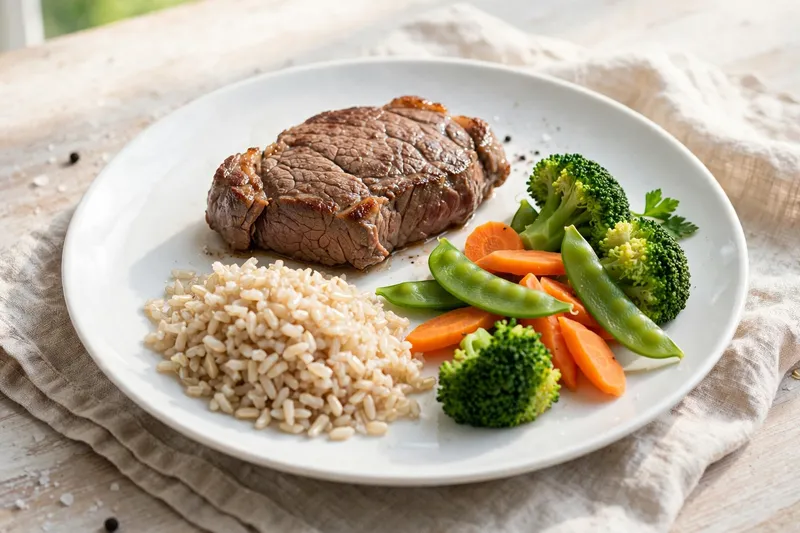
Muscle meat from beef, pork, and veal lands in the moderate range — roughly 130–240 mg of purines per 100g depending on the cut. Here are the measured values:
- Veal cutlet, cooked: 142.7 mg/100g
- Pork, ground, raw: 183.1 mg/100g
- Pork loin, boneless, skinless, raw: 237.2 mg/100g
- Bacon, cured, cooked: 428.8 mg/100g — the standout
Two things jump out. First, ordinary red meat cuts are comparable to chicken breast at 178.5 mg — moderate, not catastrophic. Second, bacon is in a different league: cooking concentrates its purines as water leaves, pushing it to 428.8 mg — firmly in the avoid range.
Organ meats are another story entirely. Beef liver measures 197–219.8 mg, beef kidney 213–230.8 mg, and pork liver 289 mg per 100g. If you eat liver regularly, you face a far higher purine load than any steak dinner delivers. You can look up any cut in our purine database before you buy.
5 Rules for Eating Red Meat with Gout
1. Keep portions to a deck of cards
A sensible serving is 85–115g (3–4 oz) — about the size of a deck of cards. At 150–200 mg of purines per 100g, that serving delivers roughly 130–230 mg of purines: a meaningful but manageable share of the day. The problem is rarely the meat itself — it is the 300g restaurant steak that triples the load.
2. Choose fresh, lean cuts — skip the processed ones
Fresh beef, pork loin, or veal are moderate. Processed red meats — bacon, sausages, hot dogs, salami — are worse per gram because curing and cooking concentrate purines (remember bacon at 428.8 mg). If red meat stays in your diet, make it fresh and lean.
3. Never eat red meat during a flare
During an active gout flare, red meat comes off the menu entirely until symptoms settle. Use the flare period for genuinely safe proteins: eggs, low-fat dairy, and tofu. Our eggs and gout guide explains why eggs are the flare-day default — they carry almost zero purines.
4. Don’t stack red meat with beer
Red meat on a normal day is a moderation food. Red meat plus beer is how flare nights happen — the purines from the meat combine with alcohol’s uric-acid-raising effect. If red meat is your dinner protein, make the drink water.
5. Skip the gravy and the broth
Purines dissolve in water, so they concentrate in cooking liquids. Gravy made from meat drippings, beef stock, and pan sauces deliver a purine hit out of proportion to their size. Eat the meat; leave the gravy boat alone.
Red Meat vs Other Proteins: The Honest Ranking
Put red meat in context against the proteins you actually choose between:
- Bacon, cooked: 428.8 mg — avoid
- Pork liver, raw: 289 mg — avoid
- Pork loin, raw: 237.2 mg — moderate-high
- Beef liver, raw: 197–219.8 mg — moderate-high
- Pork, ground, raw: 183.1 mg — moderate
- Shrimp, farmed, raw: 182.4 mg — moderate
- Chicken breast, roasted: 178.5 mg — moderate
- Veal cutlet, cooked: 142.7 mg — moderate
- Tofu: 20 mg — low
- Eggs: ~2 mg — effectively zero
The pattern is clear: fresh red meat sits in the same moderate band as chicken and shrimp. It is not the dietary villain that organ meats and bacon are — but it is nowhere near the genuinely safe proteins. For a full day of balanced low-purine eating built around these numbers, see our sample low-purine diet plan.
What About Processed Red Meat?
Processed red meat deserves its own warning. Curing, smoking, and high-heat cooking drive water out of the meat, which concentrates everything left behind — including purines. That is why cooked bacon measures 428.8 mg while raw cured bacon measures 140.7 mg: the same purines packed into a smaller, drier piece of meat.
The same concentration effect applies to sausages, pepperoni, and jerky. These foods also tend to arrive alongside other gout triggers — beer, salty snacks, sugary sauces — so the meal’s total purine and fructose load climbs fast. If you manage gout, treat processed red meat as an avoid food, not a moderation food.
3 Gout-Smarter Swaps for Red Meat Nights
You do not have to give up hearty dinners — just trade down the purine ladder:
1. Chicken or turkey instead of beef
Chicken breast at 178.5 mg is no free pass, but a palm-sized portion with the skin removed is a step down from a fatty beef cut — and a big step down from bacon or liver. Keep the same deck-of-cards portion rule.
2. Make it a tofu night
Tofu at 20 mg/100g delivers complete protein at roughly one-tenth the purines of red meat. A stir-fry with tofu, vegetables, and rice (white rice is just 5.9 mg/100g) is one of the lowest-purine dinners you can cook.
3. Build the plate around eggs and dairy
An omelet with vegetables and a side of low-fat yogurt gives you two full protein servings for almost no purines. It sounds like breakfast — but for gout, it is one of the smartest dinners available.
Red Meat and Gout: Your Questions Answered
Can I eat red meat every week with gout?
Many people do — in small portions, once or twice a week, and never during a flare. A deck-of-cards serving of fresh lean red meat is a moderation choice, not a ban-worthy one. If your flares are frequent, talk to your doctor before keeping any red meat in rotation, and learn to recognize the early signs of a gout flare so you can connect diet choices to symptoms.
Is beef worse than pork for gout?
They overlap heavily. Measured values put pork loin at 237.2 mg and ground pork at 183.1 mg, while ground beef measures 133.3 mg and veal cutlet 142.7 mg. The cut and the processing matter more than the animal — bacon (pork) is the worst of the bunch at 428.8 mg.
Does grass-fed or organic beef have fewer purines?
There is no measured evidence for that. Purine content tracks the cut and the cooking method, not the farming label. Choose grass-fed for taste or ethics — not for gout.
The Bottom Line
Red meat is a moderate-purine food: fresh lean cuts in deck-of-cards portions, once or twice a week, fit many gout diets. Bacon, sausages, and organ meats do not — their purine numbers are two to three times higher. The rules are simple: small portions, lean and fresh, never during a flare, and never stacked with beer.
Want to check another food? Search all 38,078 foods in our purine database.
For education only — not medical advice. Discuss diet changes with your doctor.