Lentils and Gout: 7 Purine Facts to Know Before Your Next Bowl
Lentils and Gout: The 222 mg Number Isn’t the Whole Story
Lentils show up on some gout food lists as a food to avoid — and at first glance, the numbers seem to agree. Our database measures dried, raw lentils at 222 mg of purines per 100g, which is higher than chicken breast at 178.5 mg and ground beef at 133.3 mg.
So do lentils belong in a gout-friendly diet, or not? The honest answer is more interesting than a yes or a no — and it starts with the fact that nobody eats raw, dried lentils. Here are 7 purine facts that settle the lentil question, all backed by measured values from our food database.
7 Purine Facts About Lentils and Gout
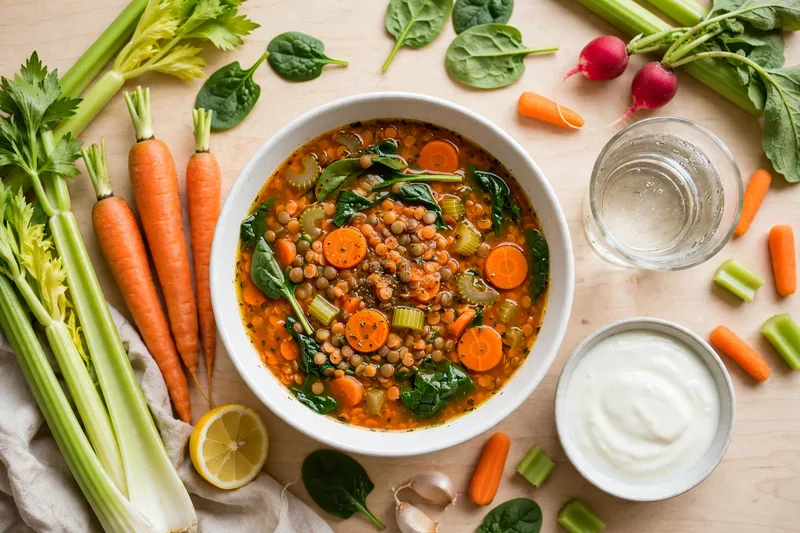
1. The 222 mg value describes raw, dried lentils
The measured purine value for lentils — 222 mg per 100g — was taken from the dried, raw product. That is the hard little pellet you buy in a bag, before it ever touches water. Dried legumes are dehydrated, so their purines are concentrated into a tiny, dense weight. Every dried bean and pea in our database shows the same pattern: great northern beans measure 213 mg dried, small white beans 202 mg, blackeye peas 230 mg, split peas 195 mg. The raw number looks alarming across the board.
But you never eat them that way. Lentils are always cooked in water before they reach your plate, and that changes the picture completely — which brings us to the most important fact on this list.
2. Cooking water washes purines out of lentils
Purines dissolve in water. When you simmer lentils in a pot of water, a large share of their purines leaches into the cooking liquid. The proof is right in our database — look at what happens to chickpeas: dried chickpeas measure 56 mg/100g, while cooked chickpeas measure just 11.2 mg/100g. Cooking in water removes most of the purine load.
Canned beans tell the same story, since they are cooked in liquid: black beans 24.1 mg, kidney beans 23.4 mg, navy beans 21.19 mg, pinto beans 25.2 mg, blackeye peas 34.8 mg per 100g. These are modest numbers — far from the 222 mg dried-lentil reading.
3. Our database doesn’t have a measured value for cooked lentils — and we won’t guess one
Here is where we stay honest: no measured purine value exists in our database for cooked lentils. The chickpea and canned-bean numbers strongly suggest cooked lentils land in a similar low range, but suggesting is not measuring — so we won’t invent a number.
You can look up lentils and 38,077 other foods in our purine database anytime. What the database tells you today is: dried lentils are high, cooking in water strips purines from every legume it has been measured for, and the cooked-lentil measurement is a gap we will fill honestly when the data exists.
4. Plant purines don’t behave like meat purines
Nutrition researchers have known for decades that purine-rich plant foods don’t carry the same flare risk as purine-rich animal foods. A plate of beans and a plate of beef can carry similar purine counts on paper, yet the body’s response to them differs. Lentils belong to the low-risk plant side of that divide.
This doesn’t make lentils purine-free — nothing with cells is purine-free. It means that for most people managing gout, cooked lentils in normal portions are a reasonable protein choice, while a steak of the same measured purine value would not be. Judge lentils against other plant proteins, not against bacon.
5. The “avoid” flag means: don’t eat them dry
Our database flags dried lentils as a food to avoid. Read that label literally: it applies to the dried product. There is exactly one way someone eats raw dried lentils — by accident. Cooked lentils are a different food in practice, with a different purine profile, and treating them as identical is the single most common lentil mistake in gout diet guides.
The same logic applies to the lentil snacks and mixes sold in stores. Baked lentil chips and dry lentil mixes are close to the dried state — our database lists them as unmeasured, so treat them with more caution than a bowl of home-cooked lentils.
6. Portion size still decides everything
A normal serving of cooked lentils is about 150–200g (roughly one cup) — and because cooking multiplies the weight with water, one cup of cooked lentils comes from only about 60–75g of dry lentils. Even before accounting for purines lost to the cooking water, the purine content per bowl is spread across a much larger serving than the 100g dried weight suggests.
Keep the bowl to one cup, eat lentils once a day at most, and don’t pair them with other high-purine foods in the same meal. A lentil-and-sausage stew, for instance, hands the purine job to the sausage. Our sample low-purine diet plan shows how to build days where each meal’s protein pulls its weight without stacking loads.
7. During an active flare, lentils wait their turn
Flare days are for the safest proteins only: eggs (around 2 mg of purines per 100g — effectively zero), tofu (20–31 mg), and low-fat dairy. Lentils are a remission food, not a flare food. When your joints are inflamed, you want the purine load as close to zero as possible, so park the lentils until the flare settles.
Learn to recognize the early signs of a gout flare so you can switch to flare-day proteins at the first twinge, not after the pain arrives.
Lentils vs Other Legumes and Proteins: The Honest Ranking
Put lentils in context against the proteins you actually choose between. Values below are measured per 100g:
- Lentils, dried, raw: 222 mg — avoid in this form
- Blackeye peas, dried, raw: 230 mg — same dried-form problem
- Great northern beans, dried, raw: 213 mg — same
- Split peas, dried, raw: 195 mg — same
- Chicken breast, roasted: 178.5 mg — moderate
- Ground beef: 133.3 mg — moderate
- Blackeye peas, canned: 34.8 mg — modest
- Black beans, canned: 24.1 mg — modest
- Green peas: 21.9 mg — low
- Tofu: 20–31 mg — low
- Chickpeas, cooked: 11.2 mg — low
The pattern is unmistakable: dried legumes look like red-zone foods; cooked legumes measure as low-purine foods. Cooked lentils belong on the second list — alongside the beans and chickpeas people with gout eat comfortably — not the first.
How to Cook Lentils for a Gout-Friendly Bowl
If you take one practical thing from this article, make it the cooking method:
- Use plenty of water. A 1:3 lentil-to-water ratio gives purines somewhere to go. The more cooking water, the more purines leach out of the lentils.
- Drain the cooking water. If the recipe allows, drain the lentils instead of serving them swimming in their cooking liquid — the liquid holds the purines that left the lentils.
- Choose red lentils for soups. They cook fastest and break down into the broth, which makes for a gentler, easier-to-digest bowl.
- Pair with low-purine partners. Vegetables, rice, and a spoonful of plain yogurt keep the meal’s total purine load low while the lentils supply protein and fiber.
Lentils and Gout: Your Questions Answered
Can I eat lentils every day with gout?
Many people do — one normal portion of cooked lentils per day fits most stable gout diets. If your flares are frequent, keep lentils to a few times a week and watch how you respond. Your own pattern matters more than any general rule.
Are red lentils better than green lentils for gout?
Our database has no separate measured values for red vs green lentils, so we won’t claim one beats the other. Both are the same food from a purine standpoint — what matters is that you cook them well and keep portions normal.
Is lentil soup safe during a gout flare?
No — keep lentils off the menu during a flare, soup included. Flare days are for eggs, tofu, and low-fat dairy. Bring lentils back once the flare settles.
Do I need to soak lentils before cooking?
Unlike large dried beans, lentils cook quickly without soaking. Soaking isn’t required for purine reduction either — the simmering water does that work. Just cook them in plenty of water and drain when possible.
The Bottom Line
Dried lentils measure 222 mg of purines per 100g — a number that would scare anyone reading it in isolation. But that number describes a raw, dried pellet nobody eats. Cooked in water like every other legume in our database, lentils belong in the low-purine zone with chickpeas, canned beans, and peas. Keep portions to one cup, skip them during flares, cook in plenty of water, and lentils earn their place as one of the most affordable gout-friendly proteins you can buy.
Want to check another food? Search all 38,078 foods in our purine database.
For education only — not medical advice. Discuss diet changes with your doctor.