Soda and Gout: How Fructose Raises Uric Acid — and What to Drink Instead
If you have gout, you probably watch what you eat. You skip the organ meats, you think twice about sardines, and you keep portions of red meat small. But the drink sitting next to your plate can matter just as much as the food on it — and soda is one of the worst offenders. This article explains why soda and gout go together so badly, what two very large studies actually found, and what to drink instead.
The surprising part comes first: soda does not raise your uric acid because it is full of purines. It raises uric acid through a completely different route — fructose. Once you understand that route, the advice stops sounding like generic “avoid sugar” guidance and starts to make practical sense.
The Short Answer: Soda and Gout Do Not Mix
Regular, sugar-sweetened soda is one of the clearest dietary triggers for gout. People who drink it daily face a substantially higher risk of developing gout than people who almost never drink it, and the risk climbs with every extra serving. Diet soda, by contrast, showed no link to gout risk in the same large studies — but that does not make diet soda a healthy choice, as we explain below.
If you drink soda every day, cutting it out is one of the simplest, cheapest changes you can make for your uric acid levels. You do not need a supplement, a special diet, or a prescription to do it. You just need a replacement drink you actually enjoy, and this article gives you several.
For the full picture of how diet fits into gout control, see our gout diet plan and our 38,078-food purine database, where you can check individual foods before you eat them.
Why Soda Raises Uric Acid When It Has Almost No Purines
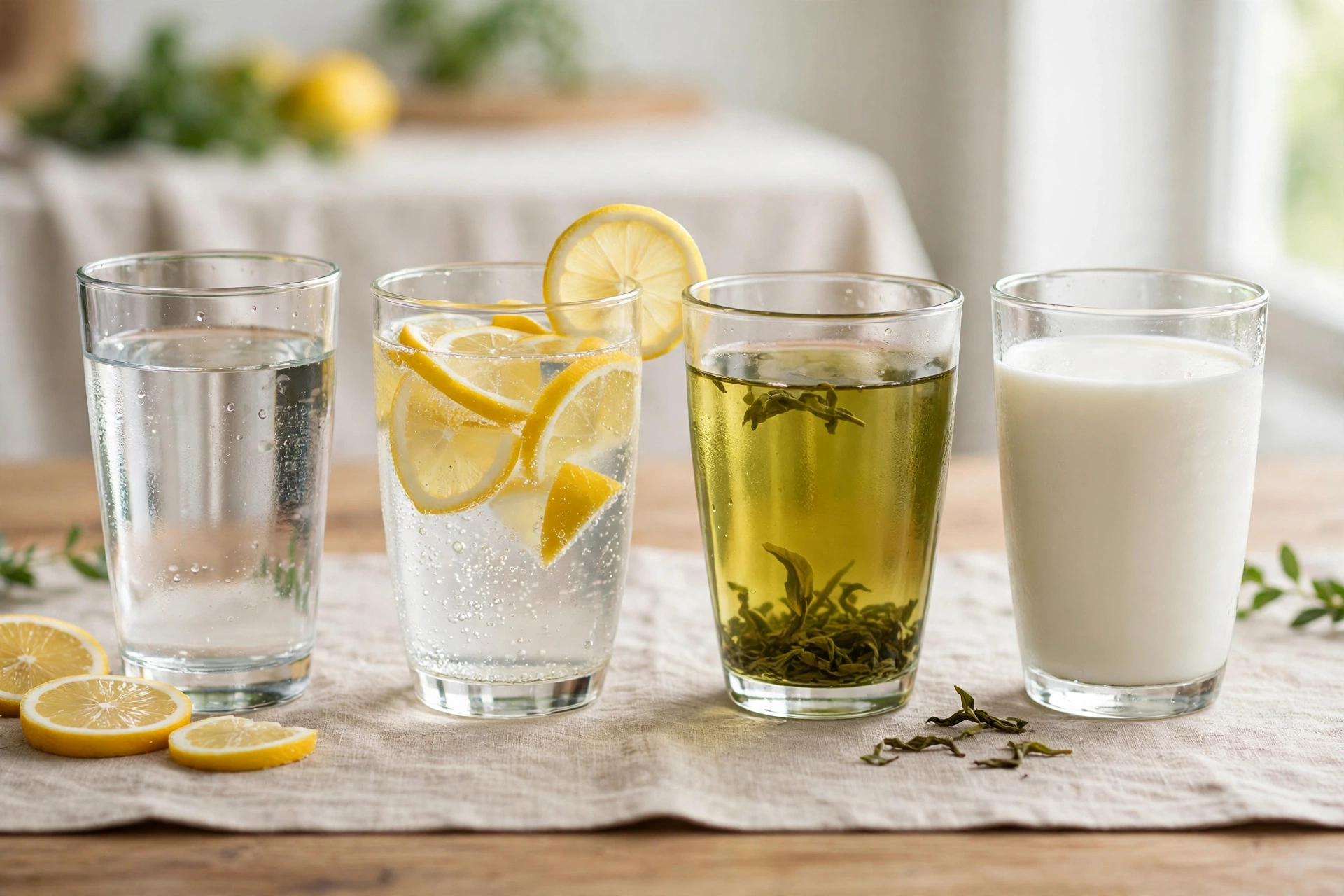
Most gout advice focuses on purines, the compounds in food that break down into uric acid. Organ meats and oily fish top that list because they pack a lot of purines into a small serving. Soda looks harmless on that score. In our database, every branded soda entry carries the honest note “Not measured” — our database does not have a measured purine value for soda at all — and the one generic measured entry for fruit juice comes in at just 1.06 mg of purines per 100 g. By purine content alone, a glass of soda would look safer than a glass of beer.
That is exactly why soda catches people out. Fructose, the sugar that sweetens most sodas, does not need to contain purines to raise uric acid. Your liver processes fructose differently from glucose. When a large dose of fructose arrives, the liver burns through its energy currency, ATP, very quickly. The leftover fragments then feed into the same pathway that purines follow, and the end product is uric acid. In plain words, fructose forces your body to manufacture uric acid even though the drink itself contains almost none of the usual building blocks.
High-fructose corn syrup, the sweetener in most regular sodas, makes this worse in a practical way: it delivers a concentrated fructose load in liquid form, with nothing to slow it down. There is no fibre, no protein, and no chewing to pace the dose. The fructose hits your liver fast, and uric acid can rise within hours of a large sugary drink.
This also explains why the same warning applies to other sweet drinks. Sweetened iced tea, energy drinks, and fruit juice all deliver fructose in liquid form. Whole fruit behaves differently, because the fructose comes in a smaller amount alongside fibre that slows absorption — which is why eating an orange and drinking a large glass of orange juice are not the same thing for gout.
What the Big Studies Actually Found
Two of the largest studies ever run on this question followed tens of thousands of people for years, and both pointed the same way.
The first followed 46,393 men with no history of gout for 12 years. Compared with men who drank less than one sugar-sweetened soft drink a month, men who drank 5–6 servings a week had a 29% higher risk of gout, men who drank one serving a day had a 45% higher risk, and men who drank two or more servings a day had an 85% higher risk. The pattern held after accounting for body weight, alcohol, blood pressure, and other dietary factors. Diet soft drinks showed no link to gout risk in this study at all.
The second study followed 78,906 women with no history of gout for 22 years. Compared with women who drank less than one serving of sugar-sweetened soda a month, women who drank one serving a day had a 74% higher risk of gout, and women who drank two or more servings a day had more than double the risk. Again, diet soft drinks showed no association with gout. Orange juice showed a similar pattern: one serving a day carried a 41% higher risk, and two or more servings a day carried more than double the risk, compared with less than one serving a month.
Three lessons stand out from these numbers. First, the risk rises with dose — this is not an all-or-nothing effect, so cutting back still helps even if you do not quit completely. Second, the effect appears in both men and women, in two independent cohorts, which makes it much harder to dismiss as a quirk of one group. Third, the studies measured new cases of gout over many years, not just a single blood test, so they speak to the outcome that actually matters: painful flares, not just a number on a lab report.
That said, keep the numbers in perspective. These are relative risks, not guarantees. An 85% higher risk does not mean an 85% chance of gout, and one soda will not cause a flare by itself. What the studies show is that daily soda shifts the odds against you, year after year — and unlike your genes or your age, it is a habit you can change.
Diet Soda: The Honest Nuance
Here is where many articles oversimplify, so let us be precise. In both large cohort studies above, diet soft drinks were not associated with gout risk. That is a real finding, and it supports the fructose explanation: take the fructose out, and the gout link disappears.
But “not linked to gout in these studies” is not the same as “good for you.” Diet soda still trains your taste buds to expect intense sweetness, it still replaces water in your day, and it still does nothing to help your kidneys flush uric acid. Some people also find that diet soda keeps the soda habit alive, which makes it easier to drift back to the sugary version. If diet soda helps you quit regular soda, use it as a stepping stone — then keep stepping toward water, sparkling water, or unsweetened tea. If you already drink diet soda daily, you do not need to panic about gout from it specifically, but switching to water still serves you better overall.
One more caution: these studies can show association, not prove cause on their own. Researchers adjusted for many other factors, and the dose-response pattern plus the known fructose mechanism make the case strong, but no single study settles a question like this alone. The Arthritis Foundation’s advice lines up with the evidence: it lists sugary drinks and high-fructose corn syrup among the foods and drinks to avoid with gout.
What About Fruit Juice, Energy Drinks, and Sweet Tea?
Fruit juice deserves its own warning, because it feels healthy and often is not, for gout purposes. A large glass of orange juice can contain the fructose of several oranges with none of the fibre that would slow it down. The women’s study above found the same dose-response pattern for orange juice as for soda. That does not mean you must never drink juice again — a small glass occasionally is a different matter from a large glass every morning — but juice should not be your daily thirst quencher if gout is a concern. Eat the fruit instead; you get the fibre, the chewing, and a much smaller fructose dose at one sitting.
Energy drinks and sweetened iced teas sit in the same category as soda: liquid sugar, usually including high-fructose corn syrup, delivered fast. Check the label, and treat them the same way you treat soda. Sports drinks are a lesser version of the same problem — they still contain sugar, just less of it per serving — so save them for genuine prolonged exercise, not for sipping at your desk.
Beer deserves a brief comparison, because many people with gout ask which drink is worse. Beer raises uric acid through alcohol and through its own purines: regular beer measures 8.48 mg of purines per 100 mL in our database, and dark beer measures 13.51 mg per 100 mL. Soda, by contrast, has no measured purine value in our database, yet still raises uric acid through fructose. In other words, beer and soda damage you through different routes and both count against you. Cutting only one while doubling down on the other does not solve the problem. Our red-zone foods list puts drinks in context alongside the highest-purine foods.
A Drink-by-Drink Comparison With Real Purine Numbers
The table below separates what we know from what we do not. Purine numbers come from our verified database; where the database has no measured value, we say so rather than guessing.
- Regular soda: no measured purine value in our database — but high fructose load, and the strongest drink-related gout link in the cohort studies. Avoid as a daily habit.
- Diet soda: no measured purine value, no fructose — and no gout link in either large study. A stepping stone, not a health drink.
- Fruit juice (generic): 1.06 mg of purines per 100 g — very low purines, but concentrated fructose, with a gout link in the women’s study. Keep servings small and infrequent.
- Beer, regular: 8.48 mg of purines per 100 mL, plus alcohol that raises uric acid and slows its excretion. A double hit.
- Beer, dark: 13.51 mg of purines per 100 mL, plus alcohol. The stronger beer choice for uric acid.
- Green tea beverage: 1.67 mg of purines per 100 g — very low, and unsweetened, so it carries no fructose load. A genuinely good swap.
- Milk, 2% fat: 0.6 mg of purines per 100 g — very low, and low-fat dairy is linked to lower uric acid. See is milk good for gout for the full evidence.
- Plain water: the default the Arthritis Foundation recommends — at least 8 glasses of non-alcoholic drinks a day, more during a flare. Our water and gout guide covers how much, and what counts.
Notice the pattern: purine numbers alone would rank soda as harmless, yet the cohort studies rank it as harmful. That gap is the whole point of this article. If you only check purine tables, you will miss the fructose effect entirely — and that is why so many people with gout keep drinking soda while carefully avoiding foods that matter less.
How to Quit Soda Without Feeling Deprived
Quitting soda fails most often because people remove the drink without replacing what they liked about it: the cold, the fizz, the flavour, or the ritual. Replace the specific pleasure, not just the liquid.
- If you miss the fizz: switch to sparkling water with lemon, lime, or cucumber. You keep the bubbles and the cold glass, and you drop the fructose to zero.
- If you miss the sweetness: taper instead of stopping cold. Mix half soda with half sparkling water for a week, then move to flavoured sparkling water, then to plain sparkling water with fruit slices.
- If you drink soda with meals: keep a jug of iced water with citrus slices on the table so the replacement is already there when the craving hits. Willpower works better when the good choice is the easy choice.
- If you drink soda for energy: check your sleep and your meals first, and try unsweetened green tea in the afternoon. It gives you a gentler lift without a sugar crash, and its measured purine content is just 1.67 mg per 100 g.
- If soda is your social drink: order sparkling water with lemon at restaurants and bars. Nobody notices, nobody comments, and you avoid both the fructose and the alcohol in one move.
Watch for hidden fructose beyond the soda can, too. High-fructose corn syrup hides in sweetened breakfast cereals, sauces, baked goods, and flavoured yogurts. Reading labels for a week often surprises people: the soda may be only part of their daily fructose load. You do not need to eliminate every gram — you need to bring the total down to a level your body can handle, and cutting the biggest liquid source first gives you the largest return for the least effort.
Finally, pair the drink change with the basics that actually move uric acid: stay hydrated, keep portions of high-purine foods moderate, and maintain a healthy weight if you need to. Drink changes alone will not replace medication if your doctor has prescribed it, and they will not dissolve crystals overnight. But they remove a daily push in the wrong direction, and that push adds up over months and years. If you want the wider picture, our high uric acid guide covers causes, symptoms, and what actually lowers it, and our symptoms page helps you recognise a flare early.
When to Talk to Your Doctor
See your doctor if you have frequent flares, if a flare does not improve within a few days, or if you notice swelling, redness, or lumps around a joint. Diet changes, including cutting soda, support your treatment — they do not replace it. If you take uric-acid-lowering medication, do not stop it because you changed your drinks; ask your doctor how diet and medication fit together for you. And if you are unsure whether a symptom is gout at all, get it checked rather than guessing: several other conditions mimic gout pain, and early treatment protects your joints.
For common questions about testing, treatment, and daily life with gout, our FAQ page gathers short, plain answers in one place.
References
- Choi HK, Curhan G. Soft drinks, fructose consumption, and the risk of gout in men: prospective cohort study. BMJ. 2008;336(7639):309-312 (PMID 18244959) — the 12-year men’s cohort: 85% higher gout risk at two or more sugar-sweetened soft drinks a day, no link for diet soft drinks.
- Choi HK, et al. Fructose-rich beverages and the risk of gout in women. JAMA. 2010;304(20):2270-2278 (PMC3058904) — the 22-year women’s cohort: 74% higher risk at one soda a day, more than double at two or more; orange juice showed a similar pattern; diet soft drinks showed no association.
- Arthritis Foundation. Gout Diet: Dos and Don’ts — practical guidance: don’t drink soda, do drink water (at least 8 glasses a day, more during a flare), and the fructose-to-purine explanation in plain language.
For education only — not medical advice. Discuss diet changes with your doctor.