What Causes Uric Acid Build Up?
What Causes Uric Acid Build Up?
Uric acid builds up when your body makes too much of it, clears too little of it, or does both at once. That simple imbalance explains most cases of high uric acid, which doctors call hyperuricemia. It does not mean you did something wrong. In many people, the kidneys simply clear uric acid less efficiently than average, and genes largely set that efficiency.
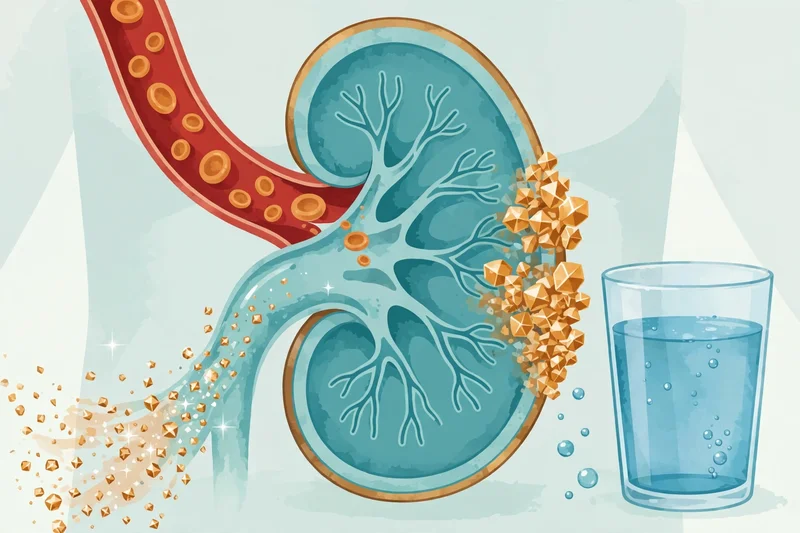
Uric acid itself is a normal waste product. Your body creates it when it breaks down purines, substances found in every cell and in many foods. Your blood carries uric acid to your kidneys, and your kidneys pass most of it into your urine. When that system falls behind, uric acid accumulates in the blood. If levels stay high, sharp crystals can form in joints and cause gout, or crystals can form in the urinary tract and cause kidney stones. Yet many people with high uric acid never develop either problem, so a high result alone does not diagnose gout.
This article explains the four engines that drive build-up in plain words: overproduction, underexcretion, diet and fructose, and cell turnover. It also covers who faces higher risk and what to do next.
Engine 1: Your Body Makes Too Much Uric Acid
Your body produces purines on its own, even before food enters the picture. Your liver turns those purines into uric acid as part of normal cell maintenance. Some people inherit traits that speed up that production. Rare enzyme differences can drive very high production, but ordinary genetic variation matters far more often: it nudges production up and clearance down at the same time.
Excess body weight also raises production. Fat tissue increases inflammation and changes how your body handles insulin, and insulin resistance reduces uric acid excretion while production rises. Metabolic syndrome — a cluster of high blood pressure, high blood sugar, excess weight around the waist, and unhealthy cholesterol levels — often travels with high uric acid for the same reason. Each factor feeds the next, so tackling weight and metabolic health helps on more than one front.
Certain health conditions push production higher too. Uncontrolled diabetes, high blood pressure, and kidney disease all appear on the standard lists of causes, and each one can worsen the others. That overlap explains why doctors rarely treat a high uric acid result in isolation. They look at the whole pattern: your weight, blood pressure, blood sugar, kidney function, and medicines.
Engine 2: Your Kidneys Clear Too Little Uric Acid
Underexcretion causes most cases of high uric acid. Your kidneys filter uric acid from your blood and send it out in urine, but they reabsorb a large share back into the blood along the way. Small inherited differences in the kidney transporters that handle that reabsorption can leave more uric acid circulating, even when your kidneys work normally in every other respect. That is why gout often runs in families, and why a careful eater can still develop gout while a heavy eater never does.
Kidney disease makes underexcretion worse. As kidney function declines, the kidneys filter less uric acid, so blood levels rise. The relationship runs both ways: long-standing high uric acid can also contribute to kidney damage and to uric acid kidney stones.
Dehydration also slows clearance. When you drink too little fluid, your urine becomes more concentrated and your kidneys excrete less uric acid. Drinking enough water across the day supports normal excretion, though water alone cannot fix a strong genetic tendency to underexcrete. Medicines can interfere here too. Diuretics (water pills), some immune-suppressing drugs such as ciclosporin and tacrolimus, low-dose aspirin, and niacin (vitamin B-3) all reduce uric acid excretion in some people. Never stop a prescribed medicine because of a lab result. Ask your doctor whether an alternative exists.
Engine 3: Diet and Fructose Add Fuel
Food supplies only part of your purine load — most purines come from your own cells — but diet still matters, especially when it stacks on top of slow clearance. Purine-rich foods raise uric acid production after digestion. The strongest dietary sources include organ meats, red meat, and certain seafood. Our food database puts real numbers on that pattern: beef liver, raw, measures 197 mg of purines per 100 g (USA figure), sardines, canned, measure 399 mg per 100 g, anchovies, canned, measure 321 mg per 100 g, and mackerel, canned, measures 246 mg per 100 g. By contrast, chicken breast, roasted, measures a moderate 178.5 mg per 100 g, and tuna, canned, measures 142 mg per 100 g. Those numbers describe purines, not calories, and they show why portion size and frequency matter more than any single food.
For the full comparison, browse our food list with purine values and our red-zone list of foods to avoid with gout. Plant foods with purines behave differently in practice. Lentils, dried and raw, measure 222 mg per 100 g in our database, yet plant purines do not raise gout risk the way meat and seafood purines do, and a varied plant-rich diet still supports overall health. Judge foods by the whole pattern, not by one number.
Fructose deserves special attention because it raises uric acid through a different route. When your liver breaks down fructose — the sugar in sugary drinks, sweetened juices, and foods made with high-fructose corn syrup — it burns through energy molecules and produces uric acid as a by-product. Fructose also reduces how much uric acid your kidneys excrete. That double effect explains why sugary drinks feature so prominently in gout research, even though they contain no purines at all. Fruit itself contains fructose too, but whole fruit brings fibre, water, and nutrients, and health authorities treat it differently from sugary drinks.
Alcohol works in a similar double way. It increases uric acid production and slows excretion. Beer and spirits raise risk more than wine, and beer adds purines from brewing on top of the alcohol effect. The alcohol mechanism alone gives a clear reason to limit intake. If you drink, keep it moderate, stay hydrated, and talk to your doctor about your personal risk.
Engine 4: Fast Cell Turnover Floods the System
Every day, your body breaks down old cells and builds new ones, and that turnover releases purines. When turnover speeds up sharply, uric acid production surges. Psoriasis accelerates skin-cell turnover, so people with extensive psoriasis often carry higher uric acid levels. Blood conditions that raise cell production, such as polycythemia vera, do the same. Leukemia and other cancers with high cell turnover also raise levels, and chemotherapy can trigger a sudden flood: as treatment destroys large numbers of cancer cells at once, their purines pour into the bloodstream. Doctors call that rapid release tumor lysis syndrome, and they monitor uric acid closely during treatment.
Rapid weight loss and crash diets can add a smaller version of the same effect. When the body breaks down tissue quickly and ketones rise, uric acid excretion falls and production can climb. That is one reason steady, sustainable weight loss beats extreme diets for people with gout. Intense exercise and dehydration can also nudge levels up temporarily, though regular moderate exercise supports long-term metabolic health.
Who Faces Higher Risk?
Risk stacks up from several directions at once. Consider yourself at higher risk if several of these apply:
- Men, and women after the menopause — oestrogen helps the kidneys excrete uric acid, so levels often rise after menopause.
- A close relative with gout — family history points to inherited clearance differences.
- Excess weight, metabolic syndrome, diabetes, or high blood pressure.
- Kidney disease or reduced kidney function.
- A purine-heavy diet, frequent sugary drinks, or regular alcohol use, especially beer and spirits.
- Medicines that slow excretion, including diuretics, ciclosporin, tacrolimus, low-dose aspirin, and niacin.
- Psoriasis, polycythemia vera, leukemia, or chemotherapy treatment.
Age matters too. Gout mainly affects men over 30 and women after the menopause, and risk climbs with age as kidney function gradually declines. None of these factors guarantees gout. They raise the odds that uric acid accumulates, and that accumulation raises the odds of crystals. If you notice gout symptoms such as sudden, severe joint pain, swelling, and redness — often in the big toe — seek medical advice promptly, especially if pain worsens or you develop a fever.
What High Uric Acid Does Next
High uric acid itself usually causes no symptoms. People often discover it on a routine blood test. Trouble starts when levels stay high enough, for long enough, that crystals form. In joints, those crystals trigger sudden inflammation: intense pain, swelling, heat, and tenderness that typically peaks within hours and lasts days. Under the skin, long-standing deposits can form firm lumps called tophi. In the urinary tract, crystals can grow into kidney stones. Our companion guide explains high uric acid causes, symptoms, and what actually lowers it in more detail.
What counts as high? Reference ranges vary by laboratory, but MedlinePlus lists normal values of 3.0 to 7.1 mg/dL for women and 4.0 to 8.6 mg/dL for men, while the Arthritis Foundation describes uric acid as usually high above 7 mg/dL for men and above 6 mg/dL for women. For people already treated for gout, doctors often aim below 6 mg/dL, and sometimes lower for severe disease. To interpret your own result by age and sex, see our guide to the normal uric acid range and what your result means. Always compare your result with your laboratory’s own range and your doctor’s advice.
What You Can Actually Do About Build-Up
You cannot change your genes, but you can lighten every other engine. Start with the steps that help regardless of which engine dominates:
- Drink enough water through the day so your kidneys can excrete uric acid normally.
- Cut back on sugary drinks and foods made with high-fructose corn syrup.
- Limit alcohol, especially beer and spirits, and keep alcohol-free days each week.
- Eat purine-heavy foods — organ meats, sardines, anchovies, and large portions of red meat — less often and in smaller portions.
- Work toward a healthy weight gradually, without crash diets.
- Review your medicines with your doctor if you suspect one contributes, but never stop a prescribed drug on your own.
A structured eating plan makes those choices easier to sustain. Our diet plan for gout and high uric acid lays out food choices day by day, and our step-by-step guide to lowering uric acid covers the evidence-backed actions in order. If you already have gout, medicine often plays the central role, because diet alone rarely overcomes strong underexcretion. Uric-acid-lowering treatment can dissolve crystals over time and prevent further flares, so discuss it with your doctor rather than relying on food changes alone.
Finally, keep perspective. Uric acid build-up usually develops over years, not days, and it usually responds to steady changes plus the right medical care. Identify which engines apply to you — slow clearance, high production, diet and fructose, fast cell turnover, or a mix — and focus your effort there. A blood test, a medicine review, and an honest look at drinks and diet give you and your doctor the information you need to act.
References
- Mayo Clinic — High uric acid level: causes — supports the overproduction versus underexcretion framing and the list of medicines, alcohol, fructose, and purine-rich foods.
- MedlinePlus — Uric acid, blood — supports normal laboratory ranges, the production-versus-removal explanation, and causes including fructose, alcohol, dehydration, and cell-turnover conditions.
- Arthritis Foundation — High and low uric acid levels — supports the thresholds for high uric acid, the kidney-excretion mechanism, and the fact that most people with hyperuricemia never develop gout.
- NHS Inform — Gout: causes — supports the crystal mechanism, risk factors including family history and kidney problems, and the roles of diet, alcohol, and sugary drinks.
For education only — not medical advice. Discuss diet changes with your doctor.