7-Day Gout Meal Plan: A Full Week With Real Purine Numbers
Starting a gout-friendly diet is easy to describe and hard to actually do. “Eat low-purine foods” sounds simple until you stand in your kitchen at 7 pm wondering whether chicken is fine, how much tofu counts, and what you are supposed to drink. This 7-day gout meal plan removes that guesswork. Every day lists breakfast, lunch, dinner, and a snack, and every headline food carries a measured purine value taken from our verified food database — not a guess, not an estimate from a random blog, but a lab-measured number in mg per 100 g.
That matters because most gout meal plans on the internet never show you a single purine number. They tell you chicken is “moderate” and tofu is “safe” and leave you to trust them. Here you see the actual numbers, so you can compare foods for yourself — and where our database genuinely has no measured value for a food, we tell you that instead of inventing one.
How this 7-day gout meal plan works
The plan follows three simple rules. First, it leans on foods with measured purine values under roughly 50 mg per 100 g for the bulk of every meal — dairy, eggs, vegetables, fruits, grains, and plant proteins. Second, it allows moderate-purine proteins (chicken, turkey, canned salmon, cod) once a day in sensible portions, because the research shows moderate animal protein beats a crash diet every time. Third, it keeps the true red-zone foods — organ meats, sardines, anchovies, beer — completely off the table.
Two caveats before you start. Purine numbers describe the food itself, not what happens after you cook it. Boiling can leach some purines into the water; roasting concentrates them as water leaves. And a meal plan is only one piece of gout management: the American College of Rheumatology’s 2020 gout guideline treats lifestyle as one pillar of care alongside medication, with a serum urate target under 6 mg/dL. This plan supports that care. It does not replace it.
The ground rules behind the meals
Understanding a few numbers makes the whole week easier. In our database, skim-friendly dairy sits near zero: milk at 2% fat measures just 0.6 mg per 100 g, and egg white barely registers at 0.73 mg per 100 g. Most vegetables land between 2 and 70 mg per 100 g — carrots at 2.1, onions at 2.2, cucumber at 9.4, zucchini at 13.1, garlic at 17, cauliflower at 33, raw mushrooms at 46.9, boiled spinach at 39.18, and raw broccoli at 70.
Plant proteins are the next step up. Tofu (kinu style) measures 20 mg per 100 g, canned chickpeas 21.6, cooked chickpeas 11.2. The large 2012 study by Zhang and colleagues found that acute purine intake from animal sources raised the odds of recurrent gout attacks far more than purines from plant sources — animal purines drove most of the risk, with the highest-intake group showing nearly five times the odds of a flare. That is exactly why this plan treats plant proteins as the everyday default and animal proteins as the once-a-day guest.
Moderate animal proteins have their place. Raw chicken breast measures 174.9 mg per 100 g, ground turkey 96, canned salmon 88, fresh cod 97.9. Compare that with the foods this plan excludes entirely: canned sardines at 399 mg per 100 g and beef liver at 197. Portion discipline, not elimination, is the realistic strategy — you can also cross-check any food against our red-zone foods list before it lands in your cart.
Day 1 — Monday
Breakfast: Plain yogurt (7 mg/100 g) with sliced banana (3 mg/100 g) and a small handful of walnuts (19.6 mg/100 g). Dairy opens the week on purpose: the landmark NEJM study by Choi and colleagues followed 47,150 men for 12 years and found the highest dairy consumers had roughly half the gout risk of the lowest consumers — while purine-rich vegetables showed no association with gout at all.
Lunch: Chickpea salad — canned chickpeas (21.6 mg/100 g), diced cucumber (9.4), chopped tomatoes (6.6), and shredded lettuce (4.7) with lemon and olive oil. Nearly everything on this plate measures under 25 mg per 100 g.
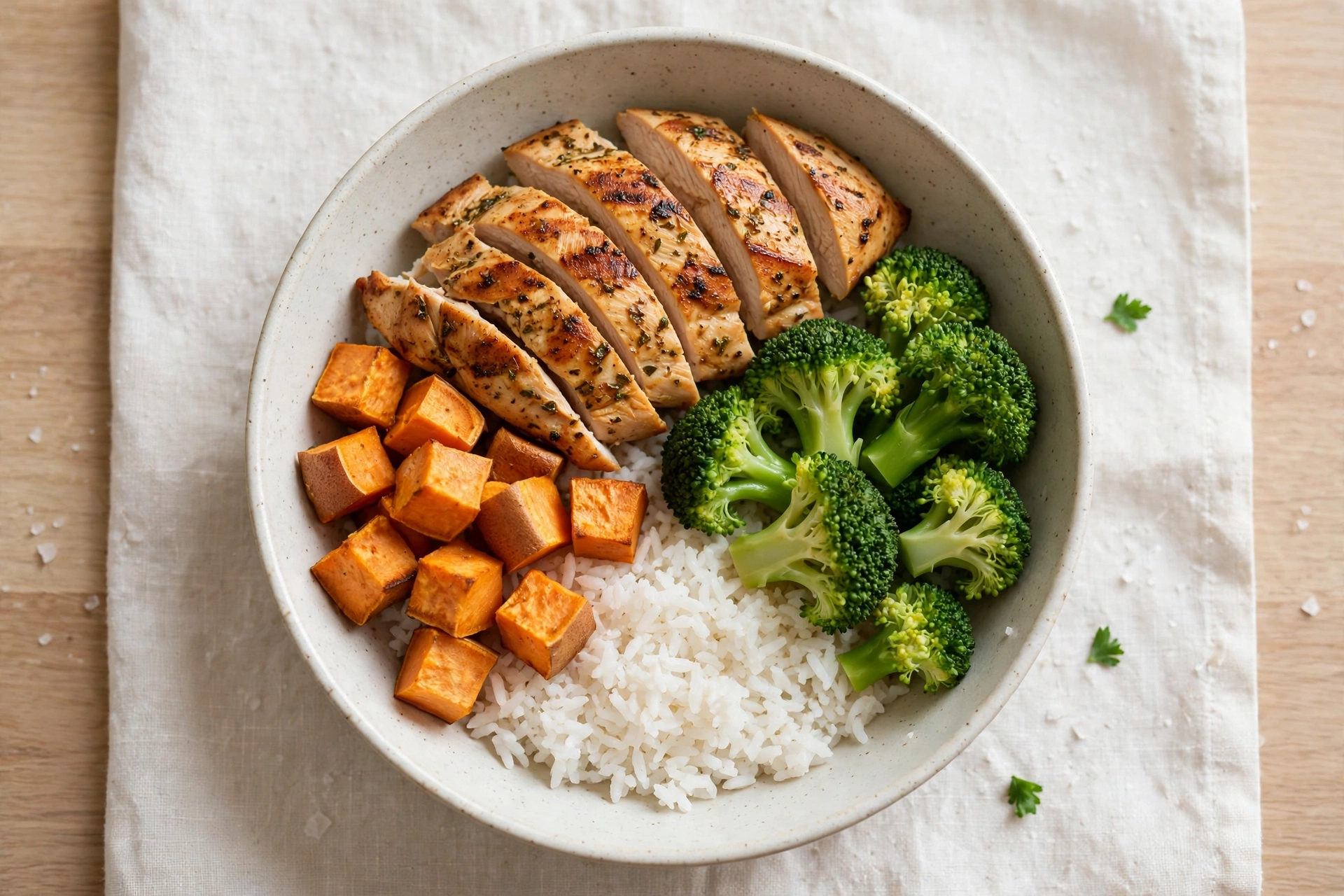
Dinner: Grilled chicken breast (174.9 mg/100 g, keep your portion around 100–120 g) with cooked white rice (5.9 mg/100 g) and steamed broccoli — boiled broccoli measures 51.82 mg/100 g, so the side stays firmly moderate.
Snack: Cottage cheese (8 mg/100 g) with cherry tomatoes (3.1 mg/100 g).
Day 2 — Tuesday
Breakfast: Two boiled eggs — egg white at 0.73 mg/100 g and whole egg effectively zero — with whole-grain toast (12.2 mg/100 g for white bread; whole grain is similar) and half a banana. Eggs are one of the safest proteins you can put on a plate.
Lunch: Tofu stir-fry — tofu at 20 mg/100 g with zucchini (13.1), onion (2.2), and garlic (17) over cooked rice (5.9). The whole dish stays in the low-to-moderate band.
Dinner: Baked fresh cod (97.9 mg/100 g) with sweet potato (17 mg/100 g) and boiled spinach (39.18). Fish appears here once — moderate portions of fish are fine, and the Arthritis Foundation now notes the health benefits of moderate fish intake outweigh the purine concern.
Snack: A small handful of almonds (31.4 mg/100 g). Weigh out 30 g rather than eating from the bag.
Day 3 — Wednesday
Breakfast: Yogurt smoothie — plain yogurt (7 mg/100 g), banana (3), and milk (0.6). Three dairy-low foods in one glass.
Lunch: Lentil soup with carrot (2.1) and onion (2.2). Here is an honesty note: dried raw lentils measure 222 mg per 100 g, which looks alarming — but that is the dry, uncooked weight. Cooked lentils absorb roughly three times their weight in water, so the cooked value is far lower; our database simply does not have a measured cooked-lentil value. Eat a normal bowl, not a mountain.
Dinner: Turkey patties — ground turkey at 96 mg/100 g — with spaghetti (6.8 mg/100 g) and tomato sauce (tomatoes 6.6).
Snack: Walnuts (19.6 mg/100 g), about 30 g.
Day 4 — Thursday
Breakfast: Cottage cheese (8 mg/100 g) with banana (3) and a drizzle of honey (0.8 mg/100 g).
Lunch: Chicken wrap — sliced grilled chicken breast (174.9 mg/100 g raw value; your serving of cooked chicken is around 100 g) with lettuce (4.7), cucumber (9.4), and yogurt (7) instead of mayonnaise.
Dinner: Canned salmon salad — canned salmon at 88 mg per 100 g, less than half the purine load of raw salmon — with boiled potato (6.5 mg/100 g), onion (2.2), and lettuce.
Snack: Green tea (1.67 mg/100 g) with a small handful of peanuts (49.1 mg/100 g). Keep the peanuts to 30 g.
Day 5 — Friday
Breakfast: Scrambled eggs (0 mg/100 g) with fresh spinach — raw mature spinach measures 51.3 mg per 100 g, and wilting it down reduces the volume you actually eat — plus toast (12.2).
Lunch: Chickpea and cauliflower bowl — cooked chickpeas (11.2 mg/100 g) with roasted cauliflower (33) and garlic (17). A fully plant-protein lunch that needs no purine math at all.
Dinner: Turkey meatballs — ground turkey at 96 mg per 100 g — with udon noodles (12.1 mg/100 g) and zucchini (13.1).
Snack: Plain yogurt (7 mg/100 g).
Day 6 — Saturday
Breakfast: Yogurt (7 mg/100 g) with banana (3) and walnuts (19.6) — the same trusted opener as Monday, because routines you can repeat are routines you keep.
Lunch: Tofu and broccoli — tofu at 20 mg per 100 g with boiled broccoli (51.82) over cooked rice (5.9).
Dinner: Roast chicken breast (174.9 mg/100 g raw) with sweet potato (17) and corn (11.8 mg/100 g).
Snack: Cucumber sticks (9.4 mg/100 g) with cottage cheese (8).
Day 7 — Sunday
Breakfast: Boiled eggs (0.73 mg/100 g for the white) with toast (12.2) and avocado (18.4 mg/100 g). The Arthritis Foundation lists avocados among the healthy fats to “dig in” to.
Lunch: Salmon and greens — canned salmon (88 mg/100 g) with lettuce (4.7), cherry tomatoes (3.1), and cucumber (9.4).
Dinner: Chickpea soup — canned chickpeas (21.6 mg/100 g) simmered with carrot (2.1), onion (2.2), and celery — note celery has no measured value in our database (see the honesty section below).
Snack: A glass of warm milk (0.6 mg/100 g).
The drink rules for all seven days
Water is your main drink — aim for 8 to 10 glasses a day; it helps the kidneys flush uric acid. Green tea measures just 1.67 mg per 100 g as a beverage and works as a daily habit. Coffee deserves a mention even though our database has no measured purine value for it: the Arthritis Foundation’s gout diet guidance notes that moderate caffeinated coffee may actually lower gout risk. What stays off the table all week: beer (regular beer measures about 8.5 mg per 100 mL and dark beer around 13.5, plus the alcohol itself blocks uric acid excretion), spirits, and sugar-sweetened sodas — fructose drives uric acid production the same way alcohol does. If you want the full reasoning on drinks and purine math, our diet plan page breaks it down.
Your one-trip grocery list
Buy everything for the week in a single trip so the plan survives contact with a busy schedule:
- Dairy and eggs: plain yogurt, cottage cheese, milk, a dozen eggs, small block of cheese (American-style measures 7 mg/100 g)
- Proteins: chicken breasts, ground turkey, one can of salmon, one fresh cod fillet, one block of firm tofu, dried or canned lentils, two cans of chickpeas
- Grains: white rice, spaghetti, udon noodles, bread
- Vegetables: broccoli, spinach, cauliflower, zucchini, cucumbers, tomatoes, lettuce, carrots, onions, garlic, sweet potatoes, potatoes, corn
- Fruit: bananas (plus oranges, apples, or berries — all fruit is a safe category per the Arthritis Foundation)
- Nuts and pantry: walnuts, almonds, peanuts (small portions), honey, olive oil, lemon, green tea
What our database honestly cannot tell you yet
No food database measures everything, and pretending otherwise would make this plan less trustworthy, not more. Our database has no measured purine value for oatmeal, oranges, apples, peaches, pineapple, quinoa, bell peppers, kiwi, celery, watermelon, or coffee. You will find oatmeal and oranges in many gout meal plans — including the ones ranking above this page — presented as safe without a single measured number attached. Our position: these foods appear in the fruit, vegetable, and whole-grain categories that the Arthritis Foundation explicitly endorses for gout, but if you want a plan built on measured numbers, lean on the foods in this article that carry one.
Cooking changes numbers too. Boiled spinach (39.18 mg/100 g) measures lower than raw spinach (51.3) partly because some purines leach into the cooking water — use plenty of water and drain it. Canned salmon (88) measures far below raw salmon (~250) because canning leaches purines into the liquid. Drain canned fish well. These are the small, real-world details that separate a plan that works from one that just reads well.
Four mistakes that sink most gout meal plans
1. Going all-or-nothing. Cutting every animal protein and living on white rice tanks your nutrition. The 2004 NEJM study found moderate protein intake was not associated with gout risk at all — total protein was never the problem.
2. Trusting “healthy” without checking. Sardines are fish, fish is healthy — and canned sardines measure 399 mg of purines per 100 g, the highest of any food in this article. Beef liver sits at 197. Check the food list before a new food becomes a habit.
3. Forgetting drinks. A week of perfect meals still loses to daily beer. Alcohol and fructose raise uric acid through pathways that no amount of broccoli cancels out. Our high uric acid guide explains the mechanisms in plain language.
4. Expecting diet alone to fix gout. Diet helps — but the ACR 2020 guideline is explicit that medication remains the backbone for people with frequent flares or tophi, and that a treat-to-target serum urate under 6 mg/dL is the goal. If you are still flaring, talk to your doctor about a blood test rather than doubling down on kale. For a refresher on what flares feel like and when to get help, see our symptoms guide.
Finally, if you have read this far, you might enjoy the evidence behind the foods themselves: our cherries and gout deep-dive shows what the tart-cherry studies actually found, and the green-zone foods list gives you the full measured-number catalog to build week eight on your own.
References
- Arthritis Foundation — “Foods to Avoid and Eat for Gout” — the do/don’t framework behind this plan (lean chicken, salmon, yogurt, all vegetables, whole grains, nuts, legumes, cherries; avoid beer, organ meats, sugary drinks, red meat).
- Choi HK et al., New England Journal of Medicine, 2004 (PMID 15014182) — 12-year study of 47,150 men: higher meat and seafood intake raised gout risk; higher dairy intake cut it nearly in half; purine-rich vegetables and total protein showed no association.
- Zhang Y et al., Annals of the Rheumatic Diseases, 2012 (PMID 22648933) — case-crossover study of 633 gout patients: high acute purine intake raised the odds of a recurrent flare nearly fivefold, driven mostly by animal-source purines.
- FitzGerald JD et al., American College of Rheumatology guideline, 2020 (PMID 32391934) — lifestyle as one pillar of gout care alongside medication, with a treat-to-target serum urate under 6 mg/dL.
For education only — not medical advice. Discuss diet changes with your doctor.