Best Foods for Gout: The Green-Zone List With Real Purine Numbers
The best protein foods for gout
Protein is where most gout food lists start, because animal protein carries the heaviest purine load. But protein is not the enemy — your body needs it. The trick is picking proteins whose purine numbers sit at the bottom of the scale.
1. Low-fat dairy: the strongest evidence of all
If there is one “superfood” for gout, it is low-fat dairy. In a landmark 12-year study of more than 47,000 men, those who ate the most dairy had a 44% lower risk of gout than those who ate the least (Choi et al., 2004). Researchers believe milk proteins help your kidneys excrete uric acid more efficiently.
- Low-fat milk (2%): 0.6 mg purines / 100 g, 50 kcal — our database’s single lowest-purine protein food. A glass a day is the most evidence-backed habit on this list.
- Plain yogurt: 7 mg / 100 g, 61 kcal — the Arthritis Foundation singles yogurt out as the dairy form to reach for. Watch flavored yogurts, which add fructose that can nudge uric acid upward.
2. Tofu: the plant protein champion
Tofu gives you real protein with a purine load a fraction of any meat: 20 mg / 100 g for soft kinu tofu (31.1 mg for firm nigari tofu). That is less than one-eighth of chicken breast. No wonder the Arthritis Foundation lists legumes and soy among its “dig in” foods. Our deep dive on tofu and gout covers which types to pick — freeze-dried koyadofu is the one trap, at 292 mg / 100 g.
3. Eggs: nearly purine-free protein
Eggs are a classic low-purine protein, and gout guides from the Arthritis Foundation to Mayo Clinic put them on the safe list. Our database does not yet have a measured purine value for plain raw egg, so we will not invent one — but the clinical guidance is consistent: eggs in moderation belong on the green list.
4. Chicken breast: good, but measure your portion
Chicken breast is the lean-meat reference point: 130.7–174.9 mg / 100 g raw in our database (178.5 mg for a roasted breast). That is firmly in the moderate zone — fine for gout, but not unlimited. Keep it to a palm-sized portion (about 4–6 ounces a day), and check our Diet Plan page for how to build meals around it.
The best vegetables for gout
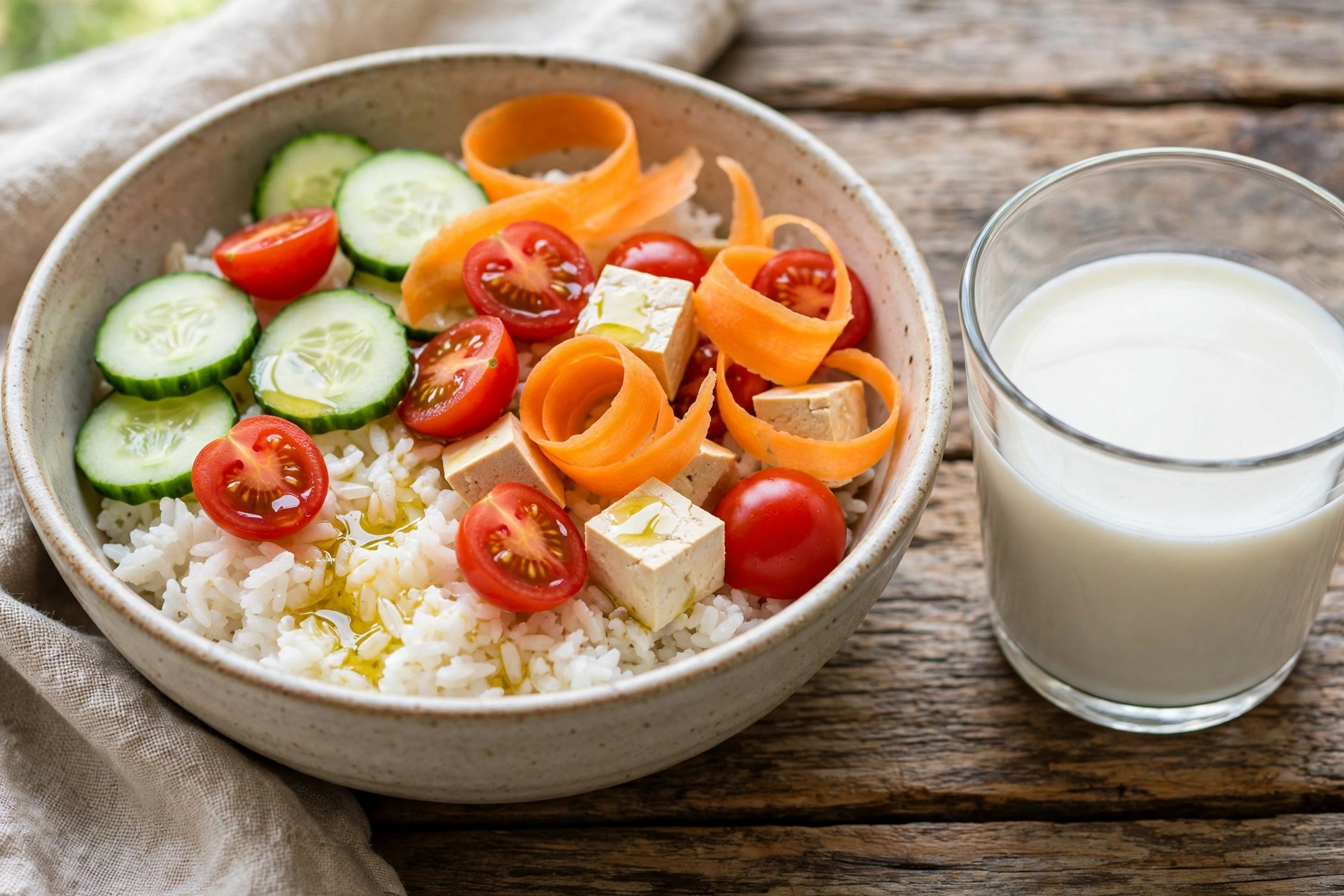
Vegetables are the biggest win on a gout diet — and they come with a scientific plot twist. The 2004 NEJM study found that eating purine-rich vegetables was not associated with a higher risk of gout at all. Plant purines simply do not behave like meat purines. So while we give you the real numbers below, the Arthritis Foundation’s verdict stands: all fresh and frozen vegetables are safe to include.
- Cherry tomatoes: 3.1 mg / 100 g — one of the lowest-purine vegetables in our entire database of 38,078 foods.
- Carrots: 2.1 mg / 100 g, 41 kcal
- Onions: 2.2 mg / 100 g, 40 kcal
- Strawberries: 2.2 mg / 100 g, 32 kcal (a fruit, but listed here for snack planning)
- Cucumber: 9.4 mg / 100 g, 10 kcal
- Garlic: 17 mg / 100 g — potent flavor with a tiny purine footprint.
- Sweet potatoes: 17 mg / 100 g, 86 kcal
- Potatoes: 6.5 mg / 100 g, 77 kcal — a gout-friendly staple starch.
- Mushrooms: 16–67 mg / 100 g across measured varieties (from hatakeshimeji at 16 mg to white hiratake at 66.7 mg). Common white button and portabella mushrooms do not have a measured value in our database yet — honest gap, not a guess. The NEJM data above means mushrooms should not scare you.
- Broccoli: 70 mg / 100 g, 34 kcal — moderate in purines, but again: plant purines carry no proven gout risk, and broccoli’s fiber and vitamin C are genuinely useful.
Run any of these through our purine food database to see exact numbers for the preparation you actually eat.
The best fruits for gout
Fruit barely registers on the purine scale, and a few fruits go further — the evidence suggests they actively help.
Cherries: the fruit with real research behind it
Cherries are the most-studied fruit in gout. A 2019 review of the evidence (Collins et al.) found cherries have antioxidant, anti-inflammatory, and hypouricemic (uric-acid-lowering) properties, and the Arthritis Foundation notes cherry juice has been shown to lower gout risk. We went deep on this in our cherries and gout guide — honest note: our database does not yet have a measured purine value for fresh cherries, but they sit at the bottom of every clinical food list.
Other top fruit picks
- Strawberries: 2.2 mg / 100 g, 32 kcal
- Bananas: 3 mg / 100 g, 89 kcal
- Citrus fruits — oranges and their juice supply vitamin C, which may help lower uric acid (the Arthritis Foundation suggests about 500 mg a day, with a doctor’s OK). Keep juice moderate: whole fruit beats juice, which carries fructose. Our database does not have a measured purine value for raw oranges yet.
- Blueberries and apples — widely listed as gout-safe, but no measured purine value in our database yet. We list them with that caveat rather than a fabricated number.
The best grains and starchy foods
Grains are naturally low in purines and give your meals the bulk that keeps you full without loading uric acid.
- White rice, cooked: 5.9 mg / 100 g, 130 kcal — one of the safest staples in the world for gout.
- White bread: 12.2 mg / 100 g, 266 kcal — whole grain is better for nutrition, but plain white bread is low-purine either way.
- Lentils: the honest case. Dried raw lentils measure 222 mg / 100 g — higher than most meats. But nobody eats them raw, and plant purines do not carry the same gout risk (see the NEJM finding above). We explored the dried-vs-cooked reality in our lentils and gout post; cooked lentils are a reasonable protein side.
- Peanuts (raw): 49.1 mg / 100 g — nuts are a safe snack class, and the Arthritis Foundation lists them among foods to dig into.
The best drinks for gout
- Water: the foundation. Your kidneys need fluid to flush uric acid through urine, so steady hydration is the single most agreed-on habit across gout guides.
- Coffee: moderate caffeinated coffee is linked to a lower gout risk in multiple studies, and the Arthritis Foundation lists it under “limit” — meaning it is OK, not that you should fear it. Our coffee and gout guide has the full picture.
- Green tea (brewed): 1.67 mg / 100 g — effectively purine-free, a solid alternative if coffee is not for you.
- Tart cherry juice: the fruit’s gout benefits in a glass — choose unsweetened, and treat it as a supplement to fruit, not a replacement for water.
Honest gaps: what stays off the green list
A “best foods” list is only trustworthy if it says what is not on it. Two common misconceptions to correct:
- Salmon is not green-zone. Raw Atlantic salmon measures 250 mg / 100 g in our database — moderate-to-high, not a free pass. It is fine in a modest portion, but it does not belong on a best-foods list. (Sardines at 399 mg and dried anchovies at 1,109 mg are full red-zone, which our foods-to-avoid guide documents.)
- Eggs, fresh cherries, oranges, apples, blueberries, and white button mushrooms have no measured purine value in our 38,078-entry database yet. Every other source calls them gout-safe, and we agree — but we will not print a number we did not measure.
A sample gout-friendly day
- Breakfast: whole-grain toast with peanut butter, a glass of low-fat milk (0.6 mg / 100 g), and strawberries (2.2 mg).
- Lunch: a rice bowl (cooked rice 5.9 mg) with tofu (20 mg), cucumber (9.4 mg), and cherry tomatoes (3.1 mg), drizzled with olive oil.
- Snack: a banana (3 mg) and a cup of coffee or green tea.
- Dinner: a palm-sized chicken breast (~131–175 mg raw) with roasted potatoes (6.5 mg), carrots (2.1 mg), onions (2.2 mg), and garlic (17 mg) — plus plain yogurt (7 mg) with strawberries for dessert.
That is a full day of satisfying eating with purine numbers you can actually look up. Realistic expectations matter: diet alone typically lowers uric acid by roughly 10–15%, so use the green list as one tool alongside medical care. For common questions, see our FAQ.
References
- Arthritis Foundation — “Foods to Avoid and Eat for Gout” — backs the reduced-fat dairy/yogurt recommendation, the safety of all vegetables (even high-purine ones), and moderate coffee and cherries.
- Choi HK et al. “Purine-rich foods, dairy and protein intake, and the risk of gout in men.” N Engl J Med. 2004;350(11):1093–1103. — 47,150 men over 12 years: dairy intake cut gout risk nearly in half; meat and seafood raised it; purine-rich vegetables showed no increased risk.
- Collins MW et al. “Is there a role for cherries in the management of gout?” Ther Adv Musculoskelet Dis. 2019. — review of cherry studies: antioxidant, anti-inflammatory, and uric-acid-lowering properties supporting a role for cherries in gout management.