Beans and Gout: Are Beans Safe? Real Purine Numbers for Kidney, Black, Pinto & More
If you live with gout, beans sit in a confusing spot. They show up on some “foods to avoid” lists because they contain purines, yet major gout guides list them among the foods you can eat. So which is it? The honest answer is good news: beans are one of the safer proteins you can choose, and the scary numbers you may have seen usually describe dried, raw beans — not the beans that actually reach your plate.
This article separates the two, gives you real measured purine numbers for the beans people actually eat, and explains why plant purines do not behave like the purines in meat and seafood.
The short answer: yes, most people with gout can eat beans
Beans, lentils, and chickpeas are plant proteins. The Arthritis Foundation’s gout diet guidance tells readers to fill up on vegetable proteins — peas, beans, lentils, and tofu — and says they do not raise uric acid levels and may even protect against gout attacks. The National Kidney Foundation’s gout guide says the same thing in different words: lentils, beans, tofu, and chickpeas are excellent protein sources for people with gout, and plant-based proteins do not raise gout risk the way red and organ meat do.
That advice rests on a large, long-running study. Researchers followed 47,150 men for 12 years and found that higher meat and seafood intake raised gout risk, while purine-rich vegetables and total protein intake showed no link to higher gout risk. Beans were never the problem in that study. Meat and seafood were.
None of this means you should eat unlimited beans during a flare, or that beans lower uric acid on their own. It means beans belong in the regular rotation, not on the banned list — and portion size matters more than the bean variety you pick.
The dried-bean trap: why the numbers look scary
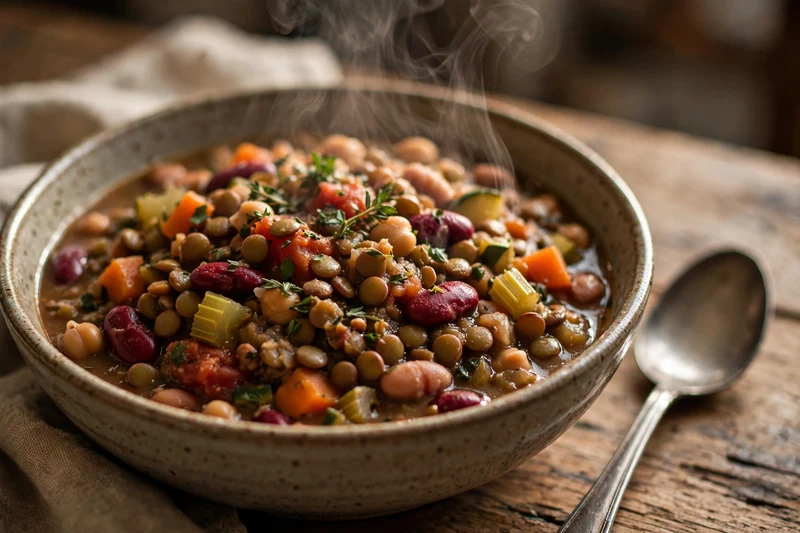
Here is where most bean confusion starts. Our food database lists dried, raw beans at numbers that look alarming: great northern beans at 213 mg of purines per 100 grams, small white beans at 202 mg, pinto beans at 171 mg, and adzuki beans at 162 mg. Dried lentils measure 222 mg per 100 grams. If you stopped there, beans would look worse than roast chicken.
But nobody eats dried, raw beans. You soak and cook them, and cooked beans weigh roughly three times as much as the dried beans you started with because they absorb water. The purines spread across a much larger, heavier serving. That is why the cooked and canned numbers tell a completely different story: canned black beans measure 24.1 mg per 100 grams, canned dark red kidney beans 23.4 mg, canned navy beans 21.19 mg, and canned pinto beans 25.2 mg. Cooked chickpeas measure just 11.2 mg per 100 grams, and canned chickpeas 21.6 mg.
So when a website warns you that beans are “high in purines” and quotes a dried-bean number, it compares a food you never eat with cooked foods you do eat. Judge beans by their cooked numbers, and they land firmly in the low range.
One honest gap in our database: we do not have a measured value for dried kidney beans, only for canned dark red kidney beans at 23.4 mg per 100 grams. We also do not have a measured value for baked beans as a dish — the branded baked-bean products in the database carry no measured purine value — so this article does not invent one for them. The canned-bean figures above are the closest measured values, and they are low.
Real purine numbers, bean by bean
All values below come from measured entries in our food database, stated per 100 grams. Use them to compare beans with each other — and with the foods that genuinely drive gout risk.
- Black beans, canned: 24.1 mg per 100 grams.
- Kidney beans, dark red, canned: 23.4 mg per 100 grams.
- Pinto beans, canned: 25.2 mg per 100 grams.
- Navy beans, canned: 21.19 mg per 100 grams.
- Chickpeas, cooked: 11.2 mg per 100 grams; canned chickpeas measure 21.6 mg.
- Green beans: 7.5 mg per 100 grams — one of the lowest numbers in this whole article.
- Green soybeans (edamame), raw: 48 mg per 100 grams.
- Broad beans, dried, raw: 35.5 mg per 100 grams (Japanese measurement) — far lower than most dried beans.
- Cranberry beans, dried, raw: 75 mg per 100 grams; lima beans, large, dried, raw: 149 mg.
- Dried soybeans, raw: 172.5 mg per 100 grams, and fermented soybeans (natto) measure 113.9 mg — the highest of the bean-family foods here, and a reason to treat soy products as a separate case (see below).
For context, our database lists roasted chicken breast at 178.5 mg per 100 grams and raw ground beef at 133.3 mg. A serving of canned kidney beans at 23.4 mg sits nowhere near those numbers. Even the highest canned bean here, pinto at 25.2 mg, is roughly one-seventh the purine density of roast chicken.
Lentils deserve a note of their own. Our earlier lentils and gout article covers them in depth, and the same dried-versus-cooked warning applies: dried lentils measure 222 mg per 100 grams, but our database does not have a measured value for cooked lentils, so we will not guess one here. Treat lentils the same way you treat beans — a plant protein that research does not link to higher gout risk — and keep portions sensible.
Why plant purines behave differently from meat purines
This is the part most “avoid beans” lists skip. Purines are not all equal in practice. The 2004 New England Journal of Medicine study mentioned above found that men who ate the most meat had a 41% higher gout risk than men who ate the least, and men who ate the most seafood had a 51% higher risk. Yet purine-rich vegetables and total protein intake showed no link to higher risk at all.
Researchers do not fully agree on why plant purines act differently, but the pattern is consistent across gout guidance: the Arthritis Foundation lists legumes among foods to eat, the National Kidney Foundation calls them excellent protein sources for people with gout, and neither puts beans in the avoid column. Beans also bring fiber, plant protein, and micronutrients that meat does not, and they replace a meat portion when you choose them — so the swap itself helps, because it removes a higher-purine food from the meal.
That swap effect matters for your weekly pattern. If beans replace beef or sardines a few times a week, your total purine load drops even though the beans themselves contain some purines. If beans simply pile on top of a meat-heavy meal, you gain nothing. Think replacement, not addition.
Beans versus the foods that actually raise gout risk
To keep beans in perspective, compare them with the real red-zone foods from our foods to avoid with gout guide. Canned sardines measure 399 mg per 100 grams, raw anchovies 411 mg, and dried anchovies 1,109 mg. Beef liver measures 197 mg per 100 grams. Beer measures 8.48 mg per 100 millilitres for regular beer and 13.51 mg for dark beer — and alcohol raises uric acid through more than purines alone, so beer punches above its purine number.
Now put canned kidney beans at 23.4 mg beside sardines at 399 mg. The fish carries about seventeen times the purine density of the beans. That gap is the whole story: beans are not in the same league as the foods that drive flares, and treating them as if they were only makes your diet narrower without making it safer.
At the other end of the scale, our best foods for gout guide shows where beans fit among the safest choices: low-fat milk at 0.6 mg per 100 grams, plain yogurt at 7 mg, tofu (kinu) at 20 mg, and mushrooms at 46.9 mg. Beans sit comfortably in that company — above milk and yogurt, below mushrooms, and far below any meat or oily fish.
How much beans, and how to cook them for gout
Most gout diet guides suggest about half a cup to one cup of cooked legumes per serving, a few times a week. That range works well with the numbers above: a cup of canned kidney beans weighs roughly 170 grams, which works out to around 40 mg of purines — still a small fraction of a meat portion.
- Choose canned or home-cooked beans. Both measure low. Rinse canned beans before eating to cut their salt, and skip cans packed in sugary sauces.
- Cook dried beans fully. Undercooked kidney beans can cause stomach upset for a different reason — natural compounds that proper cooking removes — so never taste-test raw or half-cooked kidney beans.
- Keep the rest of the dish gout-friendly. A bean stew with vegetables, herbs, and olive oil is a different meal from chili loaded with fatty beef, bacon, and cheese. The beans are rarely the problem; the company they keep often is.
- Watch the extras, not the beans. Baked beans with bacon and brown sugar, refried beans made with lard, and bean dishes swimming in meat drippings add saturated fat, sugar, or meat purines that change the meal entirely.
- During a flare, keep portions modest. This is general good practice, not a bean-specific rule: when a flare is active, most people do better with smaller portions of everything except water and the foods their doctor has cleared.
One more practical tip: use the full food list to check any bean variety before you buy it, and build bean meals into your week with the diet plan page. Our 7-day gout meal plan shows how bean and lentil meals fit into a full week without crowding out other foods.
The bean cases that need a second thought
Not every bean product deserves the same easy pass. Soy deserves a note because its numbers run higher than other beans: dried soybeans measure 172.5 mg per 100 grams raw, and natto measures 113.9 mg. Tofu is a different story — tofu (kinu) measures just 20 mg per 100 grams — because tofu production washes much of the bean away. So tofu is an easy yes, while dried soybeans and natto deserve smaller portions and a place further down your list.
Baked beans need a second thought for a different reason. Our database has no measured purine value for baked beans as a dish, and most canned baked beans add sugar, salt, and sometimes bacon or pork fat. The beans inside are fine; the sauce is the question mark. If you love baked beans, choose a version without added meat and with the lowest sugar you can find, and keep the portion modest.
Finally, remember that diet is only part of gout control. If your uric acid stays high despite a careful diet, that does not mean you failed — it usually means your kidneys excrete less uric acid than average, and medication may be needed. Our high uric acid guide explains why, and the symptoms page helps you recognise a flare early. Diet helps at the margins; it rarely fixes the whole problem alone.
The bottom line on beans and gout
Beans are safe for most people with gout in normal portions, and they are a smart swap for meat. The dried-bean numbers that scare people describe a food nobody eats. Cooked and canned beans measure between about 11 and 25 mg of purines per 100 grams — low by any standard, and far below chicken, beef, sardines, and organ meats. Research backs this up: plant proteins do not carry the gout risk that meat and seafood do, and the Arthritis Foundation and National Kidney Foundation both list beans among the foods to eat.
Pick canned or well-cooked beans, rinse them, keep the sauce simple, watch soy products and sugary baked beans a little more closely, and let beans replace meat a few times a week. That is a bean strategy your joints can live with.
References
- Choi HK et al., “Purine-rich foods, dairy and protein intake, and the risk of gout in men,” New England Journal of Medicine, 2004 — the 12-year study of 47,150 men showing meat and seafood raised gout risk while purine-rich vegetables and total protein did not.
- Arthritis Foundation, “Gout Diet: Dos and Don’ts” — recommends vegetable proteins including peas, beans, lentils, and tofu, which do not raise uric acid levels and may protect against attacks.
- National Kidney Foundation, “5 Best and Worst Foods for Gout” — lists lentils, beans, tofu, and chickpeas as excellent protein sources for people with gout, noting plant proteins do not raise risk the way red and organ meat do.
For education only — not medical advice. Discuss diet changes with your doctor.